The Endless Wildebeest Trek
Pardeep Singh
| 24-12-2025
 · Animal team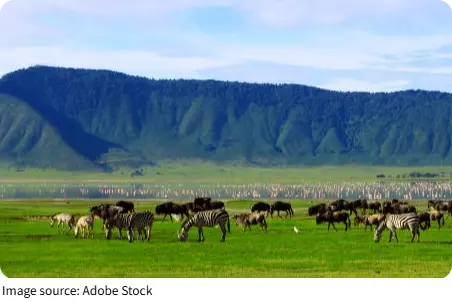
Imagine standing on the edge of a vast plain, the ground trembling beneath your feet. Dust clouds rise on the horizon as thousands of wildebeest surge forward in a thundering wave, stretching as far as the eye can see.
This isn't just a spectacle—it's the great wildebeest migration, one of the most dramatic and enduring natural events on Earth.
A Journey Without Rest
Every year, over a million wildebeest, along with zebras and gazelles, set out on a circular trek across East Africa's grasslands. This isn't a short trip—it's a year-long journey that covers nearly 1,200 miles. Driven by the search for fresh grazing, these animals follow the rains, moving in a clockwise loop across savannas, woodlands, and rivers.
For the wildebeest, migration isn't optional—it's survival. Grasslands dry out quickly under the sun, and without constant movement, food supplies would vanish. By traveling together in massive herds, they maximize their chances of finding new pastures and protecting themselves from predators.
The Perils Along the Way
The migration is breathtaking, but it's also brutal. At every stage, the wildebeest face life-threatening challenges:
1. River crossings: Perhaps the most famous moments are when herds plunge into swollen rivers. Crocodiles lurk beneath the surface, and the currents can sweep animals away. Yet they keep going, driven by instinct.
2. Predators: Lions, hyenas, and cheetahs shadow the herds, ready to strike. For predators, the migration is a feast; for wildebeest, it's a gauntlet of survival.
3. Exhaustion and disease: Long distances, limited water, and harsh conditions take a toll. Many animals don't make it to the other side of the journey.
Despite these dangers, the herds keep moving forward. The sheer determination to survive keeps the cycle alive year after year.
The Role of Zebra Companions
Interestingly, wildebeest rarely travel alone. Zebras often accompany the herds, and the partnership benefits both species. Zebras eat tougher grasses first, leaving the softer shoots for wildebeest. In return, wildebeest's sharp senses help detect predators, giving both groups better odds.
It's a reminder that cooperation, even among different species, can be the key to survival in harsh environments.
Why This Migration Matters
The great migration isn't just a spectacle for wildlife enthusiasts—it plays a vital role in the ecosystem.
1. Grassland renewal: As wildebeest graze, move, and fertilize the soil, they help grasslands regenerate.
2. Supporting predators: The migration sustains populations of lions, hyenas, and crocodiles, keeping the food chain in balance.
3. Tourism and conservation: Millions of people travel each year to witness the migration, bringing crucial funding to protect wildlife and habitats.
Without the migration, entire ecosystems would shift, affecting not only animals but also local communities that depend on conservation-driven economies.
Lessons from the Herds
Beyond the biology and drama, the migration carries lessons we can relate to:
• Resilience: The wildebeest keep moving, no matter the obstacles in their path.
• Teamwork: Safety in numbers shows the power of collective action.
• Adaptability: Following the rains teaches us the importance of adjusting to changing conditions.
These qualities are as relevant to us as they are to the herds crossing rivers and plains.
A Final Reflection
If you ever witness the migration, you'll see more than just animals moving across the land—you'll see a living story of endurance. Every hoofbeat carries the rhythm of survival, every crossing tells of risk and determination.
The great wildebeest migration isn't just about getting from one place to another. It's about the cycle of life, the balance of nature, and the resilience of creatures that face impossible odds yet keep going. Watching it unfold is a reminder that perseverance, especially when shared, can carry us all farther than we think possible.