Playful Cheetah Moments

Chandan Singh
| 13-02-2026
 · Animal team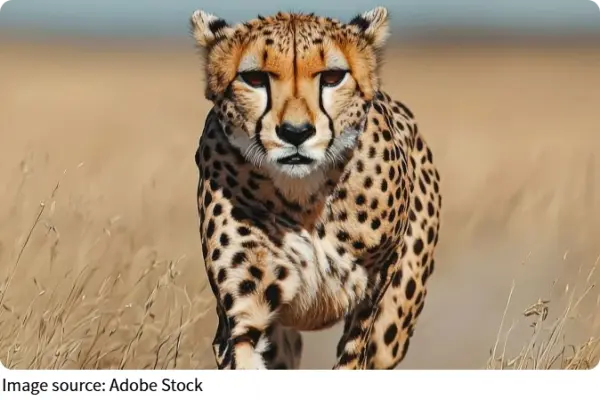
A young cheetah tumbling over its own paws can look more like a house kitten than a legendary sprinter. Before speed, precision, and quiet focus fully develop, there's a stage filled with curiosity and clumsy energy.
Watching these playful moments offers a rare glimpse into how strength and skill slowly take shape in the wild.
Why play matters in early life
Play isn't random movement. It's practice disguised as fun. Every chase, leap, and sudden turn helps young cheetahs build the coordination they'll rely on later.
Learning balance through motion
Cubs often run in zigzags or pounce on moving shadows. These actions train muscles and sharpen timing.
Stronger balance, faster reaction, better control
Understanding social signals
Gentle paw taps and short chases between siblings teach limits. One cub pauses, another responds, and a quiet rhythm forms. This helps prevent real conflict in the future.
Building confidence step by step
Small successes—like catching a drifting feather—encourage repeated effort. Confidence grows gradually rather than appearing all at once.
Actionable example:
If you ever observe young animals in a nature program or reserve, notice how repeated playful movements become smoother over time. Tracking this change helps you understand learning without needing words.
Games that shape future hunters
What looks like simple fun often mirrors real survival skills. The difference is intention. During play, mistakes are safe, and energy can be spent freely.
Stalking without pressure
Cubs crouch low and creep toward siblings or insects. Even when the target escapes, the body remembers the posture.
Short bursts of running
Instead of long sprints, playful chases focus on acceleration. Quick starts matter more than distance at this stage.
Timing the final pounce
A well-timed jump during play becomes the foundation for precise capture later in life.
Quick learning, safe mistakes, growing precision
Actionable example:
When studying animal behavior, pause a video during a playful chase. Look at body position—tail angle, head height, and paw placement. These details reveal how practice connects to real-world skill.
The role of siblings and space
Play rarely happens alone. Environment and companionship shape how confident a young cheetah becomes.
Sibling teamwork
One cub may initiate a chase while another hides. This creates unpredictable movement, which improves awareness.
Open ground for safe running
Wide grassy areas allow fast turns without obstacles. Space reduces injury risk while encouraging exploration.
Rest between bursts of energy
After intense play, cubs often collapse beside each other. Recovery is part of healthy development, not a sign of weakness.
Shared learning, safe movement, natural rhythm
Actionable example:
Think about how young pets behave in open versus crowded spaces. You'll notice freer movement and more creative play where there's room to explore—just like in wild landscapes.
How playfulness fades into focus
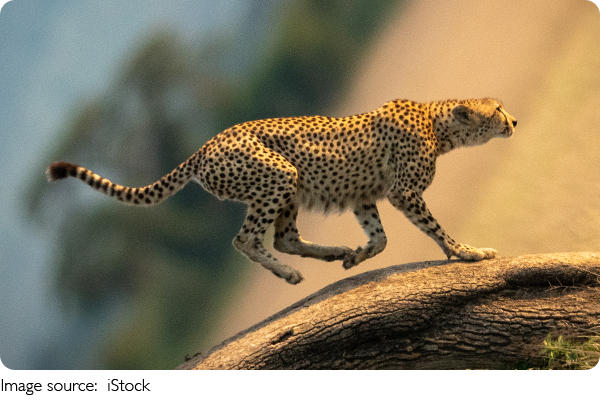
As months pass, carefree tumbling slowly changes. Movements become quieter, more deliberate, and less frequent. The playful spirit doesn't disappear, but it transforms into controlled energy.
Longer observation periods
Instead of constant motion, growing cheetahs spend more time watching surroundings. Attention replaces impulsive action.
Efficient movement
Steps become lighter and more direct. Energy is saved for moments that truly matter.
Selective interaction
Rough play decreases, replaced by calm proximity. Social bonds remain strong without constant chasing.
Calmer focus, smarter effort, steady growth
Actionable example:
Notice similar changes in many young animals—and even people. Early excitement often gives way to thoughtful action as skills improve. Recognizing this shift helps you appreciate development rather than rushing it.
The playful cheetah reminds us that greatness rarely appears fully formed. Speed, grace, and confidence all begin with awkward steps and joyful mistakes. Watching that journey unfold makes the final strength feel more meaningful, because every powerful stride once started as a simple game in the grass.