Serval Secrets in the Grass

Owen Murphy
| 14-02-2026
 · Animal team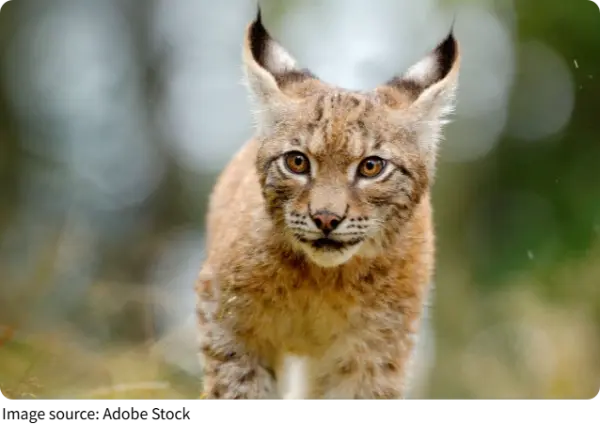
A sudden rustle in tall grass can feel like nothing more than wind—until a long-legged cat rises above the stems, ears wide and eyes fixed with total focus.
The serval moves with a kind of quiet confidence that makes every step look carefully planned.
Watching one, even on screen, feels less like seeing a typical wild cat and more like witnessing a perfectly tuned instrument designed for listening, leaping, and surviving in open landscapes.
Built for Height and Hearing
Servals look different from most small wild cats, and that difference tells an important story about how they live.
Unusually long legs
Their tall, slender legs lift the body high above grass, giving a clear view of movement below. This height also allows dramatic vertical jumps that few cats of similar size can match.
Oversized rounded ears
Those large ears work like sound collectors, turning faint rustles into precise location signals. Even hidden animals beneath soil or vegetation can be detected through tiny vibrations.
Spotted coat for blending in
Dark spots and stripes break up the body outline, helping the cat disappear into mixed light and shadow across open ground.
Actionable example: When observing wildlife footage, pause during a hunting sequence and watch the ears rather than the body. You'll notice constant micro-movements as the serval tracks sound before making any visible move.
The Precision Leap That Defines the Species
Servals are famous for their vertical pounce, a hunting style that relies more on accuracy than speed.
Jumping straight upward
Instead of chasing over long distances, a serval often springs high into the air, then drops down with exact timing onto hidden prey.
Front paws used like sensors
Just before landing, the paws adjust position mid-air, guiding the final strike with remarkable control.
Energy-saving strategy
Short, targeted leaps require less endurance than long pursuits, making this method efficient in warm environments where conserving strength matters.
Actionable example: Try slow-motion playback of a serval leap. Counting the seconds from ear focus to landing reveals how quickly sound information becomes physical action.
A Solitary but Structured Life
Although servals usually live alone, their daily routines follow clear patterns shaped by territory and survival needs.
Defined home ranges
Each individual moves through a familiar area containing resting spots, hunting grounds, and safe travel paths.
Scent communication
Rather than direct meetings, servals share information through scent marks that signal presence and reduce conflict.
Quiet resting habits
During the hottest hours, they often hide in dense cover, becoming active again when temperatures drop and prey movement increases.
Actionable example: Mapping repeated paths in nature documentaries can reveal invisible territory boundaries. Noticing where an animal turns back often shows the edge of its regular range.
Raising the Next Generation
Young servals grow quickly, but early life still depends heavily on careful protection and learning.
Hidden birth sites
Cubs are placed in thick vegetation or abandoned burrows where visibility is low and safety is higher.
Learning through imitation
As they grow, young cats watch every movement the mother makes—how she listens, steps, and times a leap.
Gradual independence
After months of guidance, the young begin exploring short distances alone before eventually leaving to form their own territories.
Actionable example: When studying animal behavior, focus on the transition moments—first short walk, first small hunt attempt. These milestones reveal more than the final mature skills.

Why Habitat Matters So Much
Servals rely on specific landscape features, making environmental stability essential for their future.
Need for tall grass and wetlands
These areas support the small animals servals depend on and provide cover for stalking.
Sensitivity to landscape change
When open hunting grounds shrink or become fragmented, movement routes and food access are disrupted.
Role in ecological balance
By controlling populations of small ground animals, servals help maintain healthier vegetation and soil conditions.
Actionable example: Conservation maps often highlight grassland corridors. Looking at these pathways shows how connected spaces allow wildlife to move safely between feeding and resting areas.
Seeing a serval isn't just about spotting a rare cat—it's about noticing how perfectly form and behavior can match a place. Every tall step, every silent pause, every sudden leap reflects thousands of quiet adjustments shaped by environment and time. Paying attention to creatures like this changes how landscapes feel. Grasslands stop being empty scenery and start becoming living systems filled with listening, movement, and intention.