What Color Are Swans?

Amit Sharma
| 04-03-2026
 · Animal team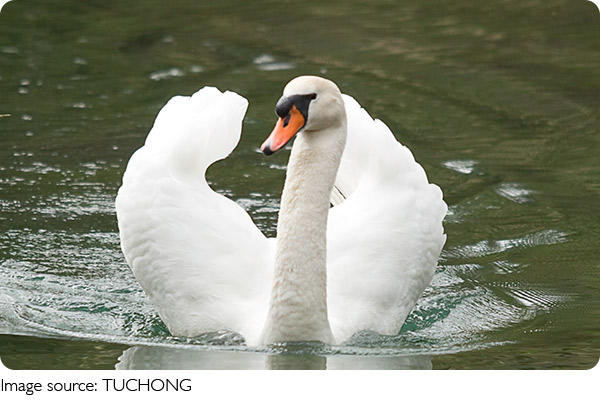
Most people picture a swan as pure white, gliding across a still lake like a floating cloud.
That image is so familiar it feels universal. Yet the world of swans is more varied than it first appears.
While white swans dominate many temperate landscapes, other species display dramatic contrasts, from charcoal feathers to the soft gray tones seen in their early life stages.
Understanding swan coloration means looking beyond assumption and examining species, age, and natural adaptation.
The Classic White Swans
- Mute Swan
The mute swan is one of the most recognized species in parks and lakes. Fully grown birds have entirely white plumage, accented by an orange bill with a black bump at the base. The bright feather color is not simply aesthetic; it reflects light and may help regulate temperature in cooler climates.
- Whooper Swan
The whooper swan also displays white feathers, but its bill pattern differs. It has a striking combination of black and bright yellow on the bill. Though similar in body color to the mute swan, these visual distinctions help identify species accurately.
- Tundra Swan
Another predominantly white species, the tundra swan has a mostly black bill with a small yellow patch near the eye in some individuals. Its pale plumage allows it to blend visually with snowy breeding grounds during certain seasons.
In all three species, the white coloration is consistent once the birds mature. However, this was not always the case earlier in their development.
Juvenile Color Changes
- Gray cygnets
Young swans, called cygnets, are typically gray or light brown when they hatch. This softer coloration offers camouflage against reeds and shoreline vegetation, helping protect them from predators.
- Gradual transition to white
As cygnets grow, their feathers slowly change from gray to white. This process can take several months. During this stage, you may see uneven patches of gray and white, especially in late summer.
- Seasonal feather condition
Even fully grown white swans may appear slightly off-white or cream-toned during molting periods. Feather wear, water minerals, and sunlight exposure can subtly affect appearance.
The Exception: Black Swans
- Predominantly dark plumage
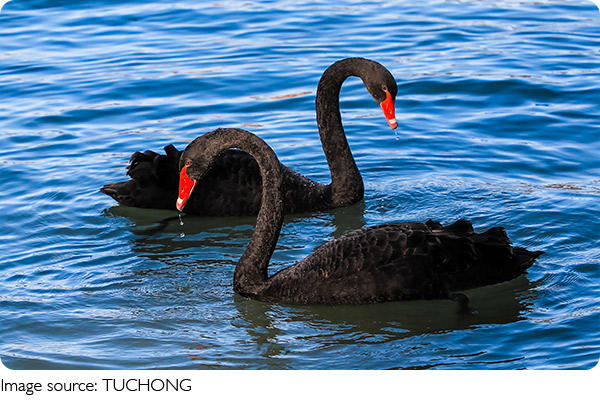
The black swan is a striking contrast to its white relatives. Its feathers are mostly deep black, with white flight feathers visible only when wings are extended. The bill is bright red with a pale tip, creating a vivid color combination.
- Evolutionary adaptation
Dark plumage may provide better camouflage in certain wetland environments. Unlike the widespread white swans of the Northern Hemisphere, black swans evolved in regions where darker coloration did not reduce survival advantage.
- Visual symbolism
Because many cultures historically associated swans with whiteness, the discovery of black swans surprised early observers. Today, the term “black swan” is often used metaphorically to describe rare or unexpected events.
Are There Other Colors?
- No naturally blue or pink swans
There are no naturally occurring swan species with blue, pink, or multicolored plumage. Any unusual coloration typically results from staining, lighting conditions, or artificial circumstances.
- Light variations
Environmental factors such as algae, mud, or minerals in water can temporarily tint feathers. For example, iron-rich water may give a slight beige hue to white plumage.
- Genetic stability
Across all recognized swan species, coloration remains genetically stable: white in most species, black in one primary species, and gray during juvenile development.
Swans may seem simple in color at first glance, yet their palette tells a story of adaptation and life stages. From the soft gray of a newly hatched cygnet to the bold dark wings flashing in flight, these birds remind us that nature rarely fits into a single image.
The next time you see a swan on the water, pause for a closer look. Beneath that serene surface may be subtle shades and details you had not noticed before.