Solitary Hunter

Chandan Singh
| 05-03-2026
 · Animal team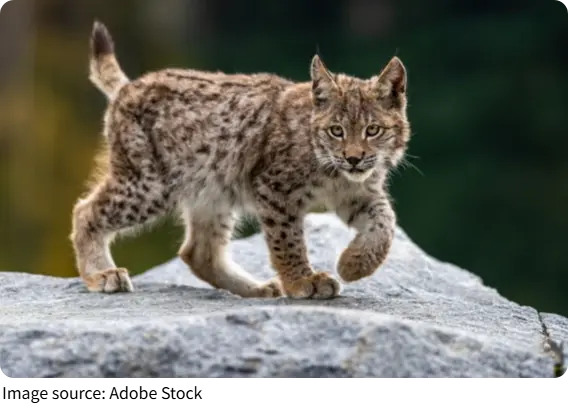
Walking along a forest trail, have you ever noticed a flash of movement in the shadows?
It's neither a tame house cat nor a wolf in size, yet it quietly dominates its woodland realm in its own unique way. The bobcat (Lynx rufus) is one of North America's most elusive felines, and its life is filled with surprising details.
Survival Strategies and Territory
1. Lone Ranger Nature
Bobcats almost always act alone. Mature individuals maintain well-defined territories, with males typically having areas about twice as large as females. They mark boundaries with scent markings, claw marks, and scat, signaling to potential intruders that the space is occupied. This solitary habit reduces conflicts with other bobcats and ensures sufficient resources when prey is scarce.
2. Nocturnal Predators
They are primarily nocturnal, most active at dawn and dusk. Their extraordinary night vision allows them to capture small mammals such as rabbits, squirrels, and birds in low light. Keen hearing is equally important—they can detect the faintest sounds from hundreds of meters away and adjust their approach with precision.
3. Flexible Territory Selection
Bobcats are highly adaptable and can thrive in dense forests, scrublands, or open wilderness. Studies show that in prey-rich areas, territories may span only a few square kilometers, while in resource-scarce dry regions, ranges may extend to dozens of square kilometers. This flexibility reflects their remarkable environmental adaptability.
Physical Traits and Hunting Skills
1. Striking Ears
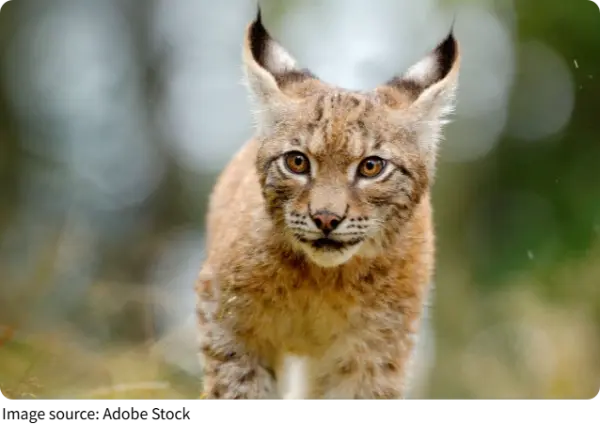
One of the bobcat's most distinctive features is the black tufts on its ears. These tufts enhance hearing and may also serve for communication and intimidation. Each ear can rotate independently, picking up even the faintest sounds of potential prey—a crucial ability when tracking small, fast-moving animals.
2. Powerful Legs
Their relatively long hind legs enable efficient jumping and short sprints. During a pursuit, a bobcat will stealthily approach its target and then launch a sudden burst of speed, increasing the chance of a successful catch.
3. Stealthy Camouflage
The gray-brown fur with spots and stripes allows bobcats to blend seamlessly into tree shadows and shrubs. Even in snowy winters, the dense fur and lighter underbelly provide camouflage. This natural concealment not only protects them from larger predators but also enhances success when approaching prey.
Social Behavior and Reproductive Insights
1. Brief Social Interactions
Bobcats are typically solitary but will seek out mates during the breeding season. Mating lasts several days, and males may traverse multiple female territories. This brief, concentrated social interaction ensures genetic diversity.
2. Maternal Teaching
Female bobcats raise their young alone, usually two to four kittens per litter. Mothers teach hunting, stalking, and avoidance skills, preparing the kittens for independent life. Young bobcats leave their mother at around nine months to begin solitary living.
3. Flexible Reproduction
In years with abundant food, bobcats may reproduce more frequently, while in lean years, litter sizes decrease. This reproductive flexibility shows their sensitivity to environmental conditions and helps maintain population stability.
In the quiet depths of the forest, the bobcat sustains ecological balance with its solitary movements and sharp instincts. Observing its life inspires awe at nature's design and reminds us to respect and protect these agile, mysterious creatures. Next time you wander a woodland trail, you might catch the gaze of those alert, intelligent eyes silently watching from the shadows.