Catnip Craze

Caleb Ryan
| 19-03-2026
 · Animal team
Hi there, fellow friends of our furry companions! We are excited to explore the fascinating world of catnip today. If you’ve ever seen a cat suddenly go wild at the sight or smell of this plant, you know it’s like magic.
But why does this little herb captivate cats so much? Let’s uncover the mystery together and include insights from American experts to understand the science behind the fun!
Getting to Know Catnip
Catnip, or Nepeta cataria, is a perennial herb that might seem ordinary to humans. Its scent is slightly spicy, nothing remarkable to us, but for cats, it’s a completely different story! There are several types of catnip, with the most common being regular catnip and purple-flowered catnip, both with strong aromas. Big-flowered catnip has a milder scent but can still excite many cats.
We can think of catnip as a natural toy for our cats—it’s an invitation to play and explore. It’s amazing how such a small plant can have such a big effect on our feline friends.
The Secret Inside Catnip
The real magic comes from a compound called nepetalactone. When cats sniff this chemical, it triggers their sense of smell in a unique way. According to Masao Miyazaki, a professor of biological chemistry, cats react to nepetalactone and similar compounds through olfactory stimulation, even without direct contact. His research shows that this scent alone can trigger instinctive behaviors such as licking, rubbing, and rolling, indicating activation of brain pathways linked to pleasure.
What Happens When Cats Meet Catnip
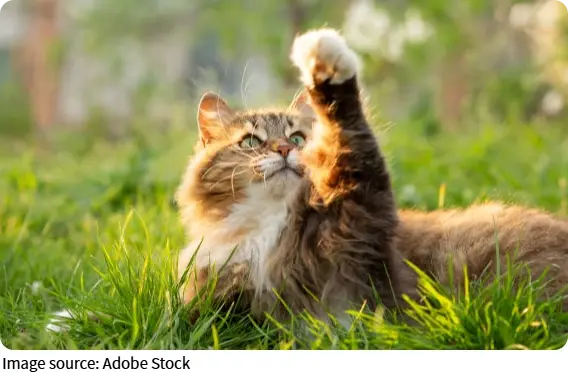
Once a cat encounters catnip, the results can be hilarious and heartwarming. Cats may rub against it, roll around, paw at it, and even drool a little. Some cats vocalize with meows, chirps, or even soft howls. These behaviors usually last several minutes before the cat takes a break. After resting for roughly two hours, they often return for another round of catnip fun.
It’s Not Just House Cats!
Interestingly, wild cats also enjoy catnip. Big cats like tigers, lions, and leopards show similar playful and excited behavior when exposed to this plant. Clearly, catnip has a universal appeal across feline species. This reminds us that playfulness and curiosity are instinctive, not just learned behaviors in our domestic cats.
Why Cats React This Way
Scientists believe that nepetalactone’s effect on a cat’s olfactory system is key. When this compound binds with certain smell receptors, it sparks a chain reaction in the brain. The result? Excitement, playfulness, and pure joy. About 30% of cats show no reaction at all, which is due to genetic differences, so if your cat seems uninterested, it’s perfectly normal.
Other Plants Cats Love
Catnip isn’t the only plant that can captivate cats. Valerian, silver vine, and some types of kiwi plants contain similar compounds that trigger playful or excited behavior. Offering these in moderation can give cats new ways to explore and enjoy their environment. We can think of it as providing a “plant playground” for our cats, giving them both fun and mental stimulation.
Safe Fun With Catnip
For pet owners, catnip can be an amazing tool for enrichment. We can sprinkle some on toys, scratching posts, or favorite resting spots. Watching our cats’ playful antics is often surprisingly entertaining! Moderation is important, though. Some cats may be sensitive or allergic, so we should always observe their reactions and adjust accordingly.
Wrapping Up
So, friends, catnip is more than just a plant—it’s a magical herb that can turn an ordinary day into a playful adventure for our feline companions. Thanks to insights from American experts, we now understand why our cats respond the way they do and how to use catnip safely. We can enjoy their silly antics and provide a safe, fun way for them to release energy. Why not try catnip with your cat today and see what new moves they invent next? We guarantee you’ll share a few laughs along the way!