Elegant Hunter of Wetlands

Mukesh Kumar
| 19-03-2026
 · Animal team
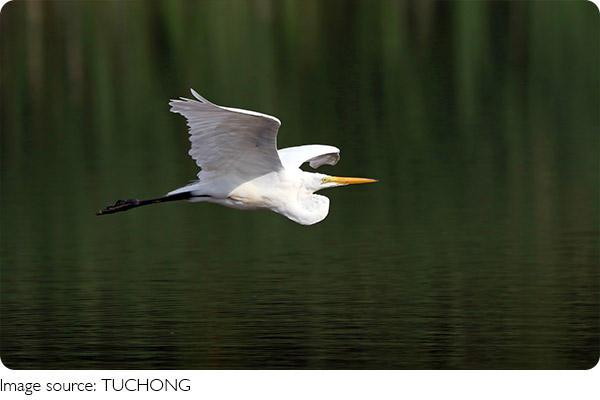
At first glance, the Great Egret appears almost unreal—pure white, motionless, and perfectly poised beside quiet water. But beneath that calm exterior lies a highly efficient predator shaped by millions of years of evolution.
Found across wetlands around the world, this bird combines patience, precision, and adaptability in ways that make it far more fascinating than its graceful appearance suggests.
Where Great Egrets Live and Thrive?
Great Egrets are closely associated with aquatic environments such as marshes, lagoons, ponds, and coastal shores. These habitats provide shallow water, which is essential for their feeding behavior. They can be found across multiple continents, demonstrating strong adaptability to both freshwater and saltwater ecosystems. Seasonal movement is common, especially in regions where water availability changes throughout the year.
Precision Hunting: A Study in Patience
One of the most remarkable aspects of the Great Egret is its hunting technique. Rather than chasing prey, it relies on stillness, timing, and precision.
Key hunting behaviors include:
1. Standing motionless for extended periods to remain undetected
2. Slowly stalking prey through shallow water
3. Using a rapid, spear-like strike with its sharp bill
4. Swallowing prey whole immediately after capture
This strategy allows the bird to conserve energy while maintaining high hunting success. Its lightning-fast strike is almost invisible to the human eye, making it a highly effective predator.
A Surprisingly Diverse Diet
Although fish make up the majority of its diet, the Great Egret is highly opportunistic and adjusts its feeding habits based on availability.
Common prey items:
1. Fish, which form the primary food source
2. Frogs and amphibians
3. Small reptiles such as snakes
4. Insects and aquatic invertebrates
5. Small mammals, including rodents
This dietary flexibility plays a key role in its survival across different environments and changing conditions.
Life in Colonies: Social Yet Competitive
While Great Egrets typically hunt alone, they become social during the breeding season. They form nesting colonies, often located in trees or dense vegetation near water.
Breeding behaviors include:
1. Males selecting and defending nesting sites
2. Courtship displays involving elegant feather movements
3. Both parents sharing incubation duties
4. Feeding chicks through regurgitation
Young birds grow quickly, but competition among siblings can be intense. Stronger chicks often receive more food, increasing their chances of survival in challenging conditions.
A Bird Saved from the Brink
Historically, the Great Egret faced severe population decline due to hunting for its delicate breeding feathers, which were once highly valued in fashion. In some areas, populations dropped dramatically.
Protective measures, including legal regulations and conservation efforts, helped reverse this decline. Today, the species has recovered significantly and stands as an example of successful wildlife protection.
Unique Physical Features and Behavior
The Great Egret possesses several distinctive physical and behavioral traits that enhance its survival.
Notable characteristics:
1. A long, flexible neck that forms an S-shape for striking
2. A sharp, pointed bill designed for precision hunting
3. Elegant breeding plumes used in courtship displays
4. Exceptional ability to remain completely still for long periods
These features make it both an efficient hunter and a visually striking presence in wetland ecosystems.

Conclusion: Grace Backed by Survival Intelligence
The Great Egret is more than just a symbol of elegance—it is a finely tuned predator with remarkable adaptability. Its ability to balance patience with precision, and beauty with function, highlights the complexity of life in wetland habitats.
Observing this bird in its natural environment reveals a deeper truth: survival in nature often depends not on speed or strength alone, but on timing, strategy, and quiet awareness.