Why Cats Ignore You

Chris Isidore
| 07-04-2026
 · Animal team
Anyone who has lived with both a dog and a cat has probably noticed a striking difference in their personalities.
Dogs often behave like enthusiastic assistants, ready to respond whenever their owner seems distressed or confused.
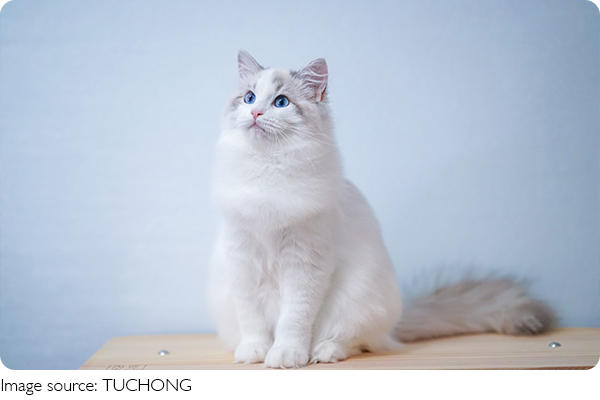
Cats, on the other hand, tend to watch quietly from across the room, as if observing a mildly interesting documentary rather than participating in the moment.
For many people, this contrast raises a familiar question: do cats actually care about helping their owners? A scientific study comparing dogs, cats, and young children offers an intriguing answer. According to the findings, cats may notice when their humans need help—but that doesn't necessarily mean they will step in.
Researchers Compared Pets With Young Children
The study, published in the journal Animal Behaviour, examined how different companions react when a caregiver appears to be searching for something. Scientists from Eötvös Loránd University and the HUN-REN–ELTE Comparative Ethology Research Group designed a simple experiment involving untrained household dogs, household cats, and children between sixteen and twenty-four months old.
In the experiment, a caregiver—either a parent or a pet owner—placed a neutral object in plain sight. The item was something ordinary, such as a dishwashing sponge, that did not have any special meaning to the animals or children involved.
After placing the object down, the caregiver began acting as if they had lost it. They looked around the room and searched deliberately, but they did not directly ask for help from the child or pet. The goal was to see whether the observers would spontaneously respond to the situation.
The results revealed a clear pattern.
Dogs and Toddlers Often Try to Help
More than three-quarters of the dogs and toddlers in the experiment reacted to the search in a helpful way. Their responses often involved simple gestures rather than complex problem-solving.
Some pointed their attention toward the missing item by repeatedly looking at the object and then back at the caregiver. Others approached the item and picked it up or moved closer to it, effectively guiding the caregiver toward the solution.
The researchers noted that this behavior closely resembled the early helping instincts seen in small children. Even though toddlers do not fully understand every situation, they often recognize when a caregiver might need assistance and attempt to contribute in whatever limited way they can.
Dogs displayed a remarkably similar pattern. Even without training, many seemed motivated to respond when their owners appeared to be struggling to locate something.
Cats Notice the Situation—but Stay Out of It
Cats behaved very differently during the same test. Observations showed that most cats were clearly aware of what their caregiver was doing. They watched the search carefully and remained attentive to the activity.
However, instead of approaching or pointing out the object, the cats typically stayed where they were. From the researchers' perspective, it looked as if they were observing the entire situation without feeling compelled to participate.
This led scientists to investigate whether the cats' lack of response came from simple indifference or from something more specific.
Cats Help When They Benefit From It
To explore the question further, the research team conducted a follow-up test. This time, the hidden object was not something neutral. Instead, the scientists used items that the animals clearly valued, such as favorite toys or treats.
Under those conditions, cats showed far more involvement. When the object involved something personally rewarding, they interacted with the search at levels much closer to those seen in dogs and toddlers.
In other words, cats demonstrated that they were perfectly capable of participating. The difference seemed to depend on whether the situation offered them a direct advantage.
Evolution May Explain the Difference
The researchers believe that the contrasting behaviors reflect the long evolutionary histories of these animals. Dogs evolved from wolves that gradually developed cooperative relationships with humans. Over generations of domestication, they became highly attuned to human emotions and needs.
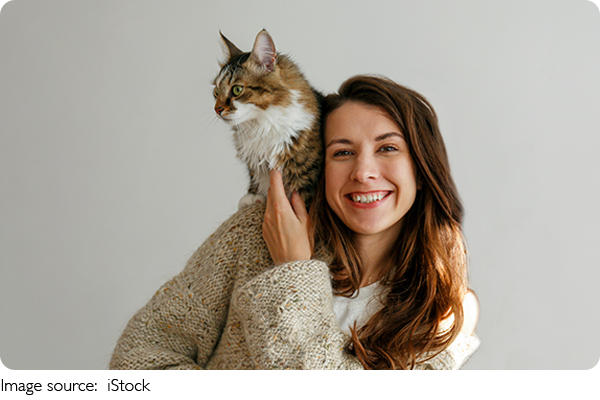
Cats followed a very different path. Their ancestors were solitary hunters that lived independently and were never strongly bred for cooperative work with humans. Although cats can form bonds with people, those bonds tend to be more selective and less focused on shared tasks.
As a result, dogs are more likely to treat a human's problem as something worth responding to, even when there is no obvious reward involved.
In the end, the study suggests something many cat owners may already suspect. Cats do notice what their humans are doing, and they are capable of helping if they choose to. They simply tend to weigh whether the effort is worthwhile.
That independent attitude might occasionally feel frustrating, but it is also part of what makes cats unique companions. Their affection exists on their own terms—and for many people, that mysterious balance of distance and closeness is exactly what makes living with them so fascinating.