Animals That Grow Back

Declan Kennedy
| 14-04-2026
 · Animal team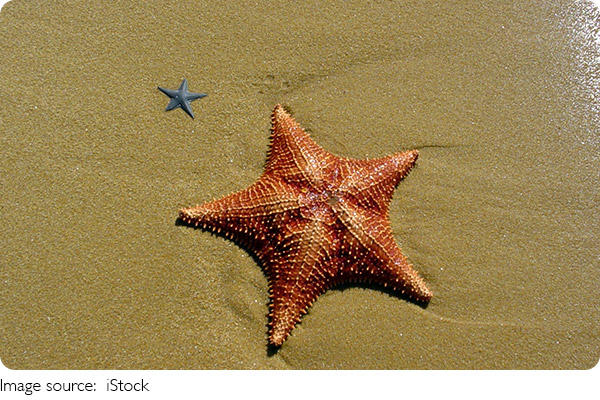
Walking along a tide pool or watching a forest stream, it's easy to overlook the quiet marvels of nature. Some animals carry a secret superpower: the ability to regrow lost limbs.
While humans must rely on medicine and prosthetics, these creatures rewrite the rules of healing, giving scientists inspiration for regenerative medicine and opening a window into evolution's creativity.
Understanding Regeneration
Definition and scope
Differences from simple healing
Why it matters?
Regeneration is the biological process by which an animal can restore a lost or damaged body part to its original form and function. Unlike scarring in humans, regeneration often recreates complex structures like bones, nerves, and skin in perfect alignment.
Simple healing only repairs tissue, while regeneration reconstructs the entire structure, including functionality. For example, a starfish can regrow an entire arm with all its tube feet intact, not just close the wound.
Studying these processes helps biologists and medical researchers explore ways to enhance tissue repair, offering potential breakthroughs in limb injuries or tissue regeneration.
Actionable example: Observing regenerative species in aquariums or controlled terrariums can reveal the speed and mechanisms behind regrowth, providing a hands-on understanding for students or enthusiasts.
Starfish and Sea Cucumbers
Arm regeneration
Defense mechanism
Environmental triggers
Starfish are iconic regenerators, able to regrow arms even when more than half their body is lost. Cells at the wound site form a specialized structure called a blastema, which drives the regrowth.
Sea cucumbers can expel internal organs under threat and regenerate them within weeks. This dramatic form of self-preservation demonstrates the close link between defense and regeneration.
Environmental conditions such as water temperature and nutrient availability affect the speed of regeneration. Warmer waters often accelerate cellular activity, shortening the time needed for limb recovery.
Actionable example: Marine conservation programs can document regeneration rates by monitoring starfish in tide pools, noting environmental factors that enhance recovery.
Amphibians: Salamanders and Newts
Complex limb restoration
Tail regrowth
Implications for medicine
Salamanders can regrow entire limbs with bones, muscles, nerves, and skin perfectly aligned. This is powered by specialized cells that revert to a stem-like state to rebuild the structure.
Many newts can regenerate tails, and some species even regrow parts of their eyes or heart tissue, showcasing the remarkable plasticity of their cells.
Scientists study amphibian regeneration to understand how to reprogram human cells for similar repair, potentially paving the way for limb or tissue restoration.
Actionable example: Observing salamander tail regrowth in lab settings allows students to measure growth rates and experiment with non-invasive interventions to see what accelerates regeneration.
Insects and Crustaceans
Molting and limb regrowth
Survival strategy
Frequency and limitations
Lobsters, and certain insects can regrow limbs after molting. The lost limb starts as a tiny bud that grows with each successive molt until fully functional.
Regeneration improves survival after predation or accidents, as a missing claw or leg doesn't permanently hinder the animal.
Limitations exist: repeated losses may slow growth, and regenerating limbs require energy that could otherwise support reproduction or growth.
Actionable example: Hobbyists keeping hermit shellfish can observe claw regeneration over molts, noting energy trade-offs and differences among individuals.
Genetic and Cellular Mechanisms
Stem-cell like cells
Signaling pathways
Environmental influence
At the core of regeneration are specialized cells that can dedifferentiate into a multipotent state, forming a blastema that develops into the new limb.
Molecular signaling pathways, like Wnt and FGF, orchestrate cell growth and differentiation, ensuring correct structure formation.
Environmental factors, such as temperature, food availability, and stress, influence both the speed and success of regeneration.
Actionable example: Educational labs can use regenerative models like planarians to study cellular responses to controlled environmental changes, illustrating the plasticity of life.
Regeneration in animals isn't just a biological curiosity—it's a window into evolution's ingenuity and a source of hope for medical science. Observing these creatures reminds us that life has solutions that often surpass human imagination, encouraging us to protect habitats and species that hold secrets yet to be fully understood.