Giraffe Tongue Secrets

Mason O'Donnell
| 27-04-2026
 · Animal team
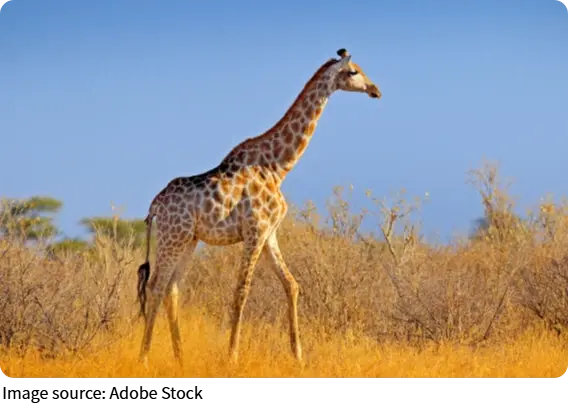
When we think about the giraffe, the first things that come to mind are its incredibly long neck and towering height. But there is another detail that often surprises people: its tongue is very dark in color.
This unusual feature is not just for show. As we explore together, we will discover that every part of this animal is shaped by its environment. Let’s dive into this fascinating topic and uncover what makes the giraffe’s tongue so special.
How Long Is a Giraffe’s Tongue?
Let’s start with something impressive. A giraffe’s tongue can reach up to about 45 centimeters (around 18 inches) in length, which is roughly the size of a grown human forearm. This length is not random. It plays a key role in helping giraffes survive in their natural habitat.
With such a long and flexible tongue, giraffes can easily reach leaves high up in trees, especially from acacia trees, that many other animals cannot access. Even more interesting, their tongues are strong and highly flexible. They can wrap around branches, carefully picking leaves while avoiding sharp thorns.
Beyond feeding, this long tongue is also useful for grooming. Giraffes can use it to clean parts of their face, including their nostrils and ears. This level of flexibility is quite rare in the animal world and shows how well-adapted they are.
Why Is the Tongue So Dark?
Now comes the big question: why is the giraffe’s tongue so dark in color?
The answer lies in survival. Giraffes spend many hours every day feeding under strong sunlight in open savannas and woodlands. If their tongues were light in color, they would be more likely to suffer damage from ultraviolet (UV) rays.
The dark color comes from a high level of melanin, a natural pigment also found in human skin. Melanin helps protect tissues by absorbing harmful UV radiation. The more melanin present, the darker the color—and the stronger the protection.
So, the giraffe’s tongue acts almost like built-in sun protection. This allows them to feed for long periods without harm. It’s a perfect example of how nature shapes animals over time to fit their environment.
However, scientists note that while UV protection is a widely accepted explanation, it may not be the only reason. The tongue is often described as bluish-black or dark purple rather than purely black.
Other Unique Features of the Tongue
The giraffe’s tongue is not only long and dark—it also has several other fascinating traits.
- First, it is coated with a thick layer of saliva. This sticky coating helps the giraffe swallow leaves more easily and protects its mouth from dryness. It also plays a role in reducing the risk of infections.
- Second, the tongue contains many taste receptors. These allow giraffes to detect differences in plant types and quality. With this ability, they can avoid eating harmful or unpalatable plants and focus on the most nutritious leaves.
- Finally, the combination of strength, flexibility, and protective features makes the tongue a highly efficient tool. It works almost like a multi-purpose instrument for feeding, cleaning, and protection.
What Can We Learn from This?
Looking at the giraffe’s tongue, we can see how every detail in nature has a purpose. This feature is not just unusual—it is essential for survival. From its length to its color and texture, everything works together to help the giraffe thrive in a challenging environment.
For us, this is a reminder to look closer at the natural world. Even small details can reveal amazing stories about adaptation and survival.
Let’s Appreciate These Gentle Giants Together
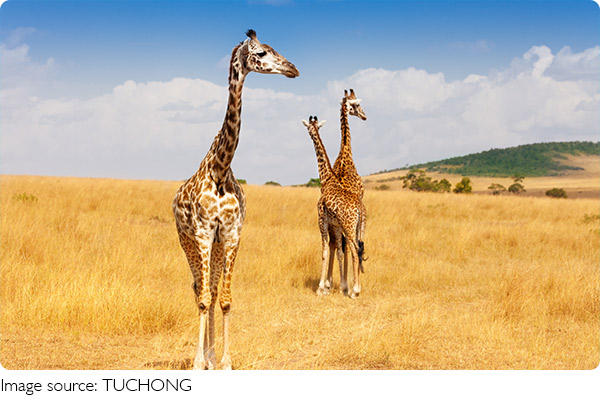
Lykkers, next time we see a giraffe—whether in a documentary or at a wildlife reserve—let’s remember there is more to it than just its height. Its tongue alone tells a story of resilience and smart design shaped by nature.
By understanding these details, we can develop a deeper respect for wildlife and the environments they depend on. Protecting these animals means preserving the delicate balance that allows such unique features to exist.
So, what do you think? Isn’t it amazing how something as simple as a tongue can hold such an incredible secret? Let’s keep exploring and appreciating the wonders of the natural world together!