Chipmunks’ Clever Cheeks

Chandan Singh
| 27-04-2026
 · Animal team
You're walking through a quiet woodland path when suddenly a small striped blur darts across the ground. It pauses for half a second—completely still—then vanishes into a hollow log.
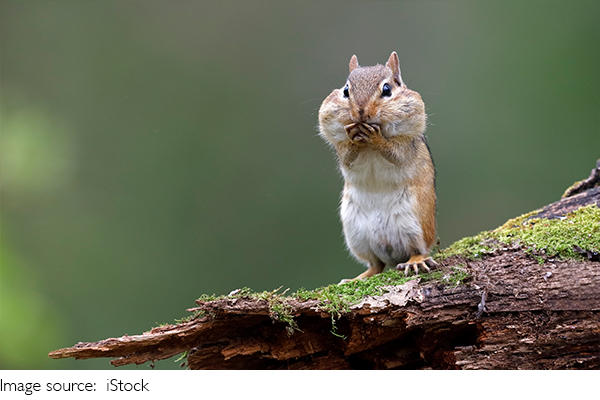
A moment later, it's back again, cheeks visibly puffed out like tiny living bags. That quick, almost playful movement belongs to the chipmunk, one of nature's most efficient little foragers.
At first glance, it seems like just a cute forest resident. But everything it does is part of a highly organized routine built around survival.
The Famous Cheek System
The chipmunk's most iconic feature is its expandable cheek pouches. These are not just for snacking—they are built-in food transport containers.
When food is found, the chipmunk quickly stuffs seeds, nuts, or berries into its cheeks. The skin stretches dramatically, allowing it to carry surprisingly large amounts compared to its body size. Watching one move with fully loaded cheeks is like seeing a tiny courier on a mission.
Once it reaches a safe spot, everything is carefully unloaded. Nothing is wasted, and every trip is part of a larger plan.
A Life of Constant Collection
Chipmunks spend a large part of their day gathering food. Their routine is simple but highly active: search, collect, store, repeat. They don't rely on a single location or moment—they build a network of hidden food spots.
1. Seeds are collected from the ground or plants
2. Nuts are chosen for long-term storage
3. Berries are eaten quickly or carried short distances
What looks like random running around is actually structured for efficiency. Every movement has purpose, even if it appears chaotic.
Underground Architecture
Beneath the surface, chipmunks create burrow systems that are more complex than most people expect. These tunnels are not just sleeping spaces—they are carefully designed storage and safety zones.
Inside, there are separate chambers for resting and food storage. Some tunnels even have multiple exits, allowing quick escape routes if needed. The design is compact but functional, built entirely through instinct and repetition.
It's a hidden world happening just below our feet.
Speed as a Survival Tool
On the surface, chipmunks rely heavily on speed. They rarely stay exposed for long. Instead, they move in short bursts—quick runs followed by sudden pauses to check surroundings.
This stop-and-go movement helps them avoid attention while maximizing efficiency. Their striped pattern also plays a role, breaking up their outline against the forest floor and making them harder to track visually.
Everything about them is designed for quick decisions and faster reactions.
More Than Just Cuteness
It's easy to see chipmunks as simply charming woodland creatures, but their behavior tells a deeper story. They are planners, collectors, and careful organizers of their environment.
Their daily routine is a balance between risk and preparation—gathering enough food while staying alert to everything around them. Even their small size becomes an advantage, allowing them to move quickly and hide easily.

In the end, the chipmunk is a reminder that intelligence in nature doesn't always look dramatic. Sometimes it appears in fast footsteps, full cheeks, and a constant rhythm of preparation that keeps everything quietly in order.