Lemurs in Sun & Scent

Amit Sharma
| 29-04-2026
 · Animal team
Lykkers, have we ever seen an animal sit quietly facing the rising sun, almost like it is meditating? And even more surprising, what if we learned that in their social world, scent can be a sign of charm?
Today, we explore the fascinating habits of the ring-tailed lemur and discover how these behaviors are not strange at all, but actually clever survival strategies shaped by nature.
Why Do They Sit Facing the Sun?
Every morning, after sunrise, these lemurs move into a very specific posture. They sit upright, stretch their arms outward, and expose their chest and belly toward the sunlight. At first glance, it looks like a peaceful ritual. However, this action has a clear and practical purpose.
Their body structure plays a key role. The fur on their underside is thinner compared to other areas, which means they lose warmth more easily during cooler nights. When daylight arrives, they need an efficient way to regain heat quickly. By sitting in this open posture, they maximize the surface area exposed to sunlight. This allows warmth to reach important areas like the chest, neck, inner arms, and thighs.
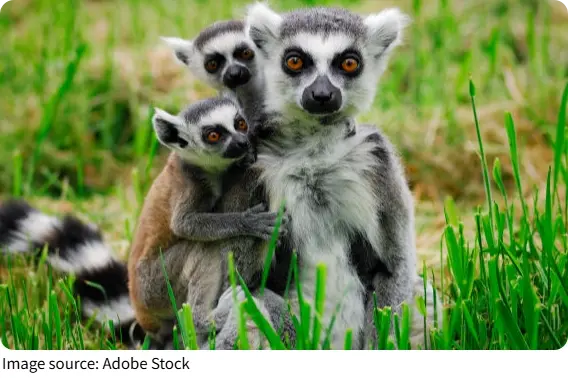
A Simple Yet Smart Heating Method
Instead of constantly moving to stay warm, they use stillness as an advantage. Remaining in one position helps conserve energy while absorbing heat. This behavior is especially useful in regions where temperatures drop overnight and rise again during the day.
We can think of it as a natural “solar recharge.” No tools, no shelter—just posture and timing. It shows how even small physical adjustments can make a big difference in survival. For these animals, the sun is not just light; it is an essential energy source.
The Role of Scent in Their Social World
Now let’s explore the second surprising behavior: the importance of scent. These lemurs have special glands located on different parts of their bodies, including the wrists, underarms, and near the tail base. These glands produce strong-smelling secretions that carry information.
Unlike many other primates, scent plays a major role in how they communicate. It helps them mark territory, signal presence, and even respond to threats. When danger appears, they may rub their tail against these glands and then wave it, spreading the scent through the air as a warning signal.
When Scent Becomes a Sign of Attraction
In their groups, scent is not just about defense—it is also linked to attraction. Males often have more developed scent glands than females. During certain periods, males actively apply these secretions onto their fur.
This behavior works like a natural display. The stronger and more distinct the scent, the more attention it may attract. Instead of visual decoration, they rely on chemical signals to express strength and condition. It is a completely different system compared to what we might expect, but within their environment, it works very effectively.
Group Life and Communication
Living in groups means communication is essential. Scent helps maintain structure within the group. It can show hierarchy, signal readiness to interact, and even reduce conflict by making intentions clear before direct contact happens.
We can see how this system supports cooperation and stability. Each individual carries information through scent, and others can interpret it without needing sound or movement. This quiet form of communication is efficient and well-suited to their lifestyle.
Evolution Shapes Every Behavior
When we look at these behaviors together—sun-facing posture and scent-based interaction—they may seem unusual at first. However, both are results of long-term adaptation. Each habit serves a clear function: maintaining body temperature, communicating effectively, and enhancing their chances of survival.
Nature often favors solutions that are simple yet effective. These lemurs demonstrate how behavior, body structure, and environment are closely connected. What looks strange from the outside is actually a refined response to real challenges.
What Can We Learn from Them?
So Lykkers, what do we think now? Next time you observe an animal doing something unusual, pause and consider the reason behind it. Ring-tailed lemurs show us that what seems strange often reflects clever adaptations—whether absorbing sunlight or sending chemical signals, every behavior is a survival strategy honed by evolution.