Night Harbor

James Carter
| 11-05-2026
 · Travel team
When daylight fades, the water doesn't go dark—it starts reflecting everything.
Buildings on both sides slowly switch on, and the whole waterfront shifts into a moving pattern of light. Victoria Harbour, in Hong Kong, China, isn't just a view; it's more like a constantly changing city canvas that never really repeats itself.
First Impression After Sunset
The first thing people usually notice isn't a single landmark, but the density of light. Towers stand close together, and each one seems to have its own rhythm. Some pulse gently, others stay steady, and together they create a layered skyline that feels alive rather than static.
The water plays a big role here. It doesn't just reflect the skyline—it stretches it, softens it, and adds a slight shimmer that changes with every passing boat.
Victoria Harbour
Best Places to Watch the View
There's no single “correct” spot, but a few areas naturally stand out:
1. Tsim Sha Tsui waterfront promenade – wide open views across the harbor
2. Golden Bauhinia Square area – slightly farther, but gives a broader angle
3. Central waterfront – closer to the financial district lights
4. Elevated viewpoints in nearby hills – quieter and more panoramic
Each location feels a bit different. Down by the water, everything feels immersive. Higher up, the skyline becomes more structured and graphic.
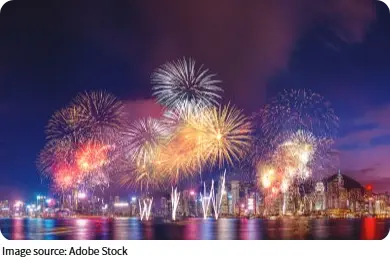
The Light Show Effect
One of the most talked-about moments is the coordinated light display across buildings on both sides of the harbor. It's not loud or overwhelming—it's more like a slow choreography between architecture and light.
Colors shift gradually, beams move in sync, and reflections ripple across the water. Even if you've seen photos before, the real experience feels more layered because of the movement and scale.
Getting Around the Waterfront
Moving between viewpoints is simple and part of the experience:
• MTR: Tsim Sha Tsui station connects directly to the main promenade
• Ferry: Short harbor crossings give a different angle of the skyline
• Walking: The waterfront paths are continuous and easy to follow
• Bus or taxi: Useful for reaching slightly higher viewpoints
Many visitors end up walking most of the route because the views keep changing as you move.
Timing & Practical Details
• Best viewing time: after sunset when building lights fully activate
• Entry: Free for all waterfront areas
• Ferries: short harbor rides typically around $1–$3 USD depending on route
• Observation spots: no tickets required for public viewpoints
Weather can change how the scene feels. Clear evenings give sharper reflections, while slightly hazy nights soften the skyline into a glowing gradient.

Where to Stay Nearby
Staying close to the waterfront makes it easy to revisit the view at different times:
• Budget stays: around $60–$120 USD per night
• Mid-range hotels: about $130–$250 USD per night
• Waterfront hotels with direct views: $260 USD and above
Even simple hotels nearby can offer quick access to the promenade, which is useful if you want to catch both early evening and later night moods.
Small Things That Change the Experience
• Arrive before full darkness to see the transition
• Stay a bit longer than planned—the view changes every few minutes
• Try both sides of the harbor for completely different perspectives
• A short ferry ride adds movement to what is usually a static viewpoint
Victoria Harbour doesn't rely on a single landmark or moment. It works through scale, reflection, and constant motion. By the time you leave the waterfront, the impression isn't just the skyline itself, but the way it keeps reshaping while you're still looking at it.