Lion Roar Secrets

Mason O'Donnell
| 21-05-2026
 · Animal team
Hey Lykkers, have you ever imagined standing on a vast open plain and hearing a deep, powerful roar echoing from far away? It feels almost unreal, yet it is a daily part of life for lions. This sound can travel long distances and carries more meaning than just noise.
In this article, we explore why this big cat uses such a strong voice, how it works, and how other similar animals compare. Together, we will uncover the logic behind one of nature’s most impressive sounds.
Territory and Space Communication
One of the main reasons for this deep vocal signal is related to space awareness. Lions live in groups and need defined areas where they can find food and rest. The sound works like a natural boundary marker. When one group announces its presence, others understand the message and tend to keep distance. This type of communication helps reduce unnecessary conflict. Instead of constant physical encounters, sound becomes a way to share information about presence and limits. In wide open landscapes, where visibility can be limited, this system becomes especially useful.
Keeping the Group Connected
Beyond marking space, lions also rely on sound to stay connected with each other. A group is often spread out while moving, resting, or searching for food. A deep call helps individuals recognize where others are located.
This signal can also carry emotional information. A calm tone may indicate relaxation, while a stronger tone can reflect urgency or alertness. When group members reunite, softer calls can help strengthen social bonds. In this way, sound becomes part of daily coordination and group harmony.
Protection and Warning Signals
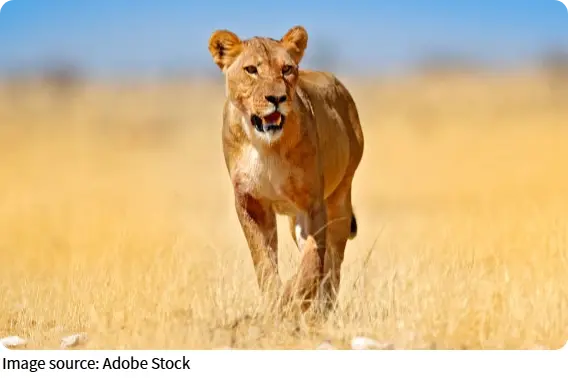
Another important function is protection. The strong vocal output can discourage other predators from approaching food sources or resting areas. Many animals in the same environment recognize the sound as a warning.
Instead of direct confrontation, the signal helps prevent unnecessary competition. It also reduces the risk of losing resources that are essential for survival. In this sense, sound acts as a natural defense tool that supports stability within the environment.
How the Sound Is Produced
The ability to produce such a powerful sound comes from a unique physical structure. The voice system in these large cats is specially adapted. Their throat structure allows greater flexibility, and the vibration area is shaped in a way that supports deeper resonance.
Inside the vocal system, certain tissues are arranged to enhance elasticity. This helps create a stronger airflow vibration, which leads to a louder output. Compared with many smaller animals, this structure is more efficient for long-distance communication.
The combination of airflow control and flexible internal structures is what makes the sound so impressive and far-reaching.
Comparison With Other Big Cats
Other large wild cats also produce strong vocal signals, but each has its own characteristics.
- A tiger produces one of the most powerful sounds among them. It can be extremely loud and is often used to mark space and express presence. It is usually heard across large distances in forested environments.
- A jaguar, found in the Americas, also produces a strong call. Its sound is often used during seasonal social interaction or when protecting food. It can travel several kilometers, helping it communicate across dense habitats.
- A leopard produces a softer version compared to the others. Its sound is shorter in range and often used for closer communication, especially at night. It helps in locating companions or expressing alertness when needed.
Although all these animals share similar abilities, each one adapts its sound style based on environment and lifestyle.
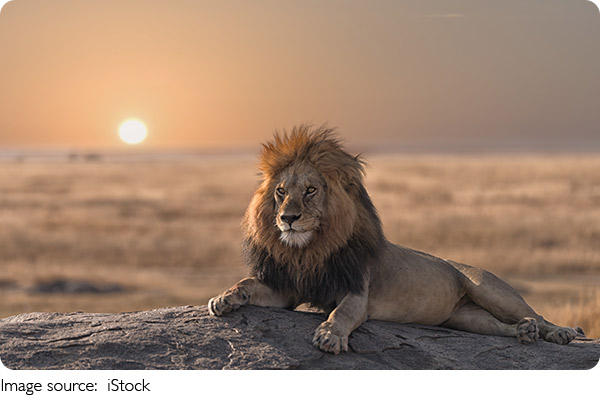
When we listen to these deep natural sounds, we are not just hearing noise. We are witnessing a complex communication system shaped by environment, survival needs, and social structure. It is a reminder that nature often relies on simple yet effective solutions to solve complex challenges.
Lykkers, next time you think about the wild, imagine how much information can travel through a single sound wave across open land. What other hidden communication methods in nature do you find most fascinating?
Why do LIONS roar?
Video by Kiddopedia