Forest Flame Spirit

James Carter
| 28-05-2026
 · Animal team
Hello Lykkers! Have you ever walked through a quiet forest and suddenly spotted a flash of red leaping through the trees?
That lively figure may be the Eurasian red squirrel. With its bright fur, fluffy tail, and agile movements, this small animal resembles a tiny flame moving through woodland canopies.
Many people first encountered these squirrels through short online videos. Their rapid movements, playful behavior, and impressive agility quickly attracted attention. Watching them move from branch to branch feels like observing a natural performance unfolding in the forest. Let’s take a closer look at what makes this species so remarkable.
A Distinctive Red Coat
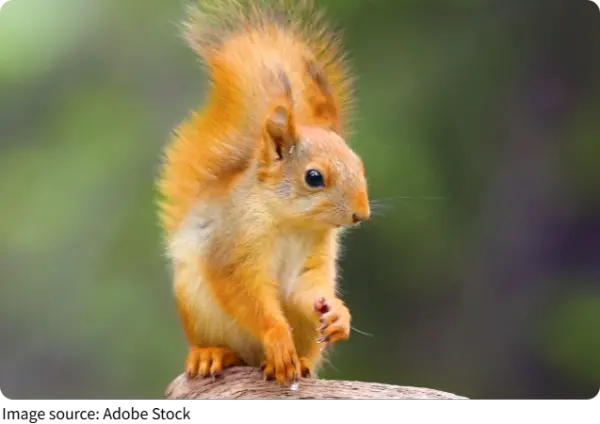
The Eurasian red squirrel is named after its reddish fur. From a distance, its coat can resemble a glowing spark against green foliage. The body length is typically around 19–23 centimeters, making it slightly larger than several other squirrel species.
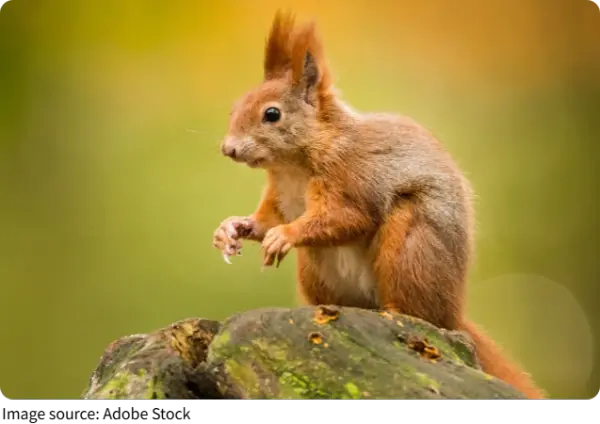
Its coat changes with the seasons. In warmer months, the fur appears lighter—ranging from red to orange-brown. In colder months, it becomes darker and thicker, providing better insulation. The chest and belly remain white, creating a strong visual contrast.
The fur is soft and dense, giving the animal a plush appearance. Combined with its dark eyes and pointed ears, it is widely regarded as one of the most visually distinctive forest mammals.
The Tail: A Key Survival Tool
The tail is one of the squirrel’s most recognizable features. Large, fluffy, and nearly as long as its body, it plays an important functional role.
During movement, the tail helps with balance, especially when the squirrel leaps between branches. It also assists with steering and stability during fast directional changes.
In colder conditions, the squirrel wraps its tail around its body for warmth, functioning as natural insulation. This adaptation is essential for survival in colder forest environments.
Arboreal Lifestyle
Eurasian red squirrels are highly arboreal, spending most of their lives in trees. They are skilled climbers and move efficiently through complex forest structures.
They are commonly found in broadleaf and mixed forests, particularly in areas with mature trees. Their activity level is highest in the early morning, when they forage, explore, and move through the canopy.
Their movement is highly agile. They can climb, leap, and land with precision, using their strong claws and flexible body structure to navigate branches with ease.
Diet and Food Storage Behavior
Their diet consists mainly of nuts, seeds, berries, and other plant-based foods. They actively forage throughout the day depending on seasonal availability.
A key survival behavior is food caching. When food is abundant, they store it in hidden locations such as tree cavities, soil, or beneath bark. This allows them to survive periods when food is scarce.
They also demonstrate strong spatial memory, often returning to stored food locations even after extended periods.
Behavior and Social Structure
Eurasian red squirrels are primarily solitary and territorial animals. Each individual typically maintains its own home range and does not form stable social groups.
Although multiple squirrels may appear in the same area, this is usually due to overlapping territories or shared feeding zones rather than cooperative behavior.
Their survival relies on individual alertness, territorial defense, and adaptability to environmental changes.
Habitat Challenges
One of the major threats facing Eurasian red squirrels is habitat loss. As forests decline or become fragmented, their access to food, shelter, and nesting sites is reduced.
Healthy forest ecosystems are essential for their survival. Trees provide not only food resources but also safe movement pathways and protection from predators.
Conservation efforts focused on forest preservation play an important role in maintaining stable populations of this species.
A Living Flame of the Forest
Lykkers, the Eurasian red squirrel is more than just a charming forest animal. Its vibrant fur, agility, and adaptive behavior make it a key part of woodland ecosystems.
Each leap between branches reflects precision, balance, and survival instinct. Observing them offers a reminder of how dynamic and interconnected nature truly is.
Have you ever seen a red squirrel in the wild? Which feature stood out to you the most—the color, the tail, or its movement?