Pisa Beyond the Tower

Mei
| 04-09-2026
 · Travel team
Pisa, Italy, is instantly recognizable for its famous Leaning Tower, yet the city offers much more than this celebrated landmark.
Medieval architecture, riverside scenery, elegant streets, and Tuscan cuisine give Pisa a distinctive character that rewards exploration.
Its compact center and convenient transport connections also make it well suited to both short visits and overnight stays.
Tower of Pisa, Italy
The Leaning Tower
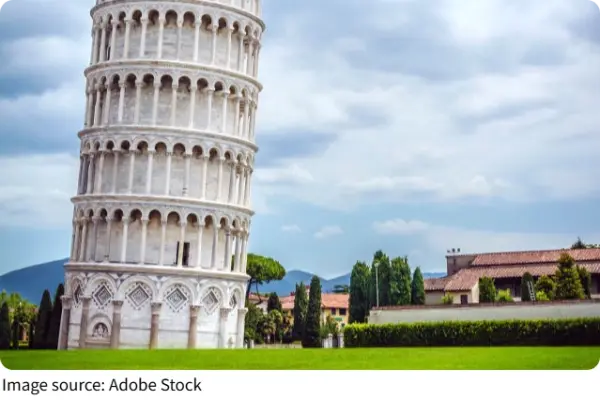
The Leaning Tower is the bell tower of Pisa Cathedral and the defining landmark of Piazza dei Miracoli. Construction began in 1173, and the structure gradually developed its characteristic inclination because of unstable ground beneath its foundations. The tower stands at approximately 56 meters and has an inclination of about 3.9 degrees.
A spiral staircase leads to the upper levels, offering views across the cathedral complex and surrounding city. The climb consists of 251 steps and takes roughly 30 minutes. Visits are organized by time slot, so advance planning is recommended during busy periods.
Piazza dei Miracoli
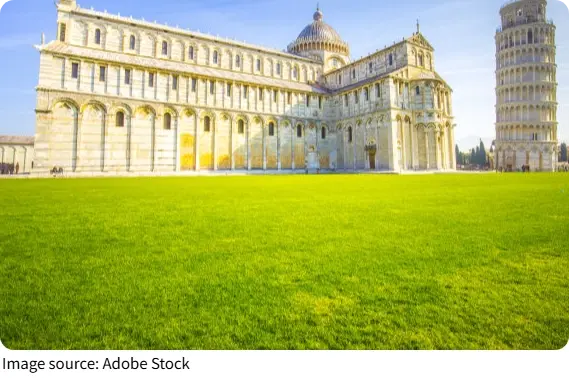
The Tower forms part of the remarkable Piazza dei Miracoli, which also contains the Cathedral, Baptistery, and Camposanto. Together, these monuments create an exceptional medieval architectural ensemble distinguished by white marble, intricate arcades, galleries, and balanced proportions.
Allow several hours to explore the complex and appreciate its architecture from different viewpoints. The surrounding lawns provide an open setting for taking in the scale of the monuments.
Historic Center and Arno River
Beyond Piazza dei Miracoli, Pisa's historic center reveals a distinctive character shaped by historic architecture, lively streets, and the Arno River. The river runs through the city, creating attractive waterfront views and pleasant walking routes.
Borgo Stretto is particularly appealing for its arcaded streets, historic buildings, cafés, and shops. Exploring this area on foot provides an easy way to experience the city's architecture and everyday atmosphere.
How to Get There
Pisa is well connected by rail and air. Travelers arriving at Pisa Centrale can reach the historic center on foot or by local public transportation.
From the airport, the PisaMover shuttle connects directly with the railway station. A one-way journey costs approximately $8, while a return ticket is about $15.
Walking is practical for many central attractions. Local buses are useful for longer journeys, with a standard urban fare of approximately $2.35. Taxis and bicycles provide additional flexibility.
Local Food
Pisa's culinary scene reflects the flavors of Tuscany, with fresh pasta, vegetable soups, regional breads, cheeses, seasonal ingredients, pizza, and traditional desserts widely available.
For budgeting purposes, expect approximately $15–$25 for a casual lunch, $3–$6 for a light meal or pizza portion, $3–$6 for gelato, and $1.50–$3 for coffee. Prices vary according to the establishment and location.
For greater variety, explore cafés and restaurants throughout the historic center rather than concentrating solely around the main monuments.
Accommodation
Pisa offers accommodation for different budgets. Budget hostels and guesthouses may cost approximately $55–$110 per night, while mid-range properties can range from around $130–$275 per night. Rates depend on season, location, room category, and demand.
Staying near Pisa Centrale is convenient for travelers using regional trains, while accommodation near Piazza dei Miracoli provides easy access to the city's principal monuments.
Practical Visit Tips
Reserve Tower admission in advance when possible, particularly during periods of high visitor demand. Comfortable footwear is recommended for exploring the city, while the Tower requires climbing a narrow, uneven staircase.
A practical itinerary begins at Piazza dei Miracoli before continuing through the historic center toward the Arno. This route brings together Pisa's principal architectural sights, historic streets, dining options, and riverside scenery without unnecessary travel between attractions.
Pisa combines remarkable medieval architecture with a compact historic center, scenic riverfront, regional cuisine, and convenient transport connections. The Leaning Tower provides the city's iconic introduction, while the surrounding streets and landmarks reveal a broader cultural and architectural character. For Lykkers, taking time to explore beyond the Tower creates a more complete and rewarding experience.