White-Tailed Deer Facts

Raghu Yadav
| 08-06-2026
 · Animal team
When we think of deer, we often imagine graceful animals moving quietly through forests or meadows. But did you know that some deer are surprisingly skilled swimmers? Among them, the white-tailed deer stands out as one of nature's most adaptable and successful mammals.
These remarkable animals can travel through forests, wetlands, grasslands, and even swim across large stretches of water. In some situations, they have been observed crossing water bodies up to 14 kilometers wide in search of food, shelter, or new territory.
Today, let's explore the fascinating world of white-tailed deer and discover why they have become one of the most widespread deer species on Earth.
A Deer Family with Incredible Diversity
The white-tailed deer belongs to one of the largest deer groups in the world. Scientists recognize dozens of subspecies that have adapted to different regions and climates. This impressive diversity has helped the species thrive across a vast geographical range.
Originally found throughout much of North America and Central America, white-tailed deer have also established populations in several other regions. Their ability to adjust to changing environments has played a major role in their success.
Unlike many animals that depend on very specific habitats, these deer can flourish in a wide variety of landscapes. Their flexibility allows them to survive where many other species would struggle.
Recognizing the White-Tailed Deer
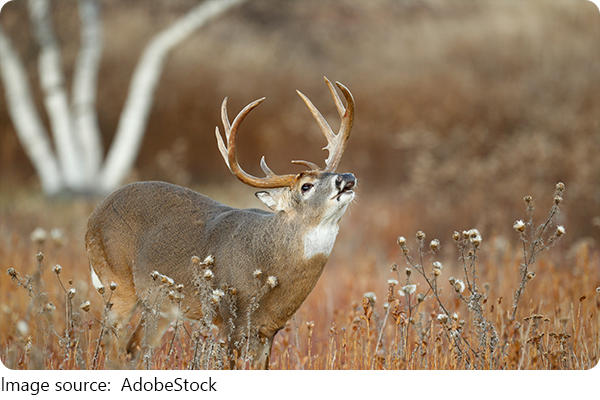
White-tailed deer are medium-to-large members of the deer family. Fully grown individuals typically reach around 1.9 meters in body length and stand approximately 0.9 meters tall at the shoulder.
Their name comes from a distinctive feature visible when they run. Although the tail itself is relatively short, the underside is bright white. When alarmed or moving quickly, they raise the tail, revealing the white area like a signal flag. This flash of white helps other deer in the group stay connected while moving through dense vegetation. Their appearance combines elegance with practicality. A sleek body, long legs, and strong muscles allow them to move efficiently through many different types of terrain.
Masters of Adaptation
One of the greatest strengths of white-tailed deer is their extraordinary adaptability.
These animals can live in temperate, subtropical, and tropical environments. They are equally comfortable in mixed forests, broadleaf woodlands, rainforests, shrublands, and open countryside.
Moist regions, semi-dry landscapes, and even areas with limited rainfall can all support white-tailed deer populations. They can also live at various elevations, from lowland habitats to mountainous regions. This flexibility means they do not rely on one particular ecosystem. As long as suitable food and cover are available, they can establish stable populations and continue to grow.
Their success demonstrates an important lesson found throughout nature: the ability to adapt often matters more than physical strength alone.

An Extremely Flexible Menu
Food availability changes throughout the year, and white-tailed deer have developed a highly versatile diet to cope with these shifts.
They feed on leaves, shoots, fruits, seeds, bark, twigs, and a wide variety of plant materials. During seasons when preferred foods become scarce, they can switch to other available resources such as nuts, fungi, and various forms of vegetation.
This dietary flexibility gives them a major survival advantage. Instead of depending on only a few food sources, they can take advantage of whatever nutritious plant material is available in their surroundings.
Because they are able to use so many different resources, they can successfully occupy habitats that might not support more specialized animals.
Natural Swimming Champions
Perhaps one of the most surprising abilities of white-tailed deer is their swimming skill.
Many people do not associate deer with water, yet these animals are excellent swimmers. Their powerful legs generate strong propulsion, allowing them to move steadily through rivers, lakes, and coastal channels.
When searching for food, avoiding environmental pressures, or expanding into new areas, they can travel impressive distances through water. Reports have documented crossings of up to 14 kilometers under favorable conditions.
Swimming also helps them reach islands and isolated habitats that may offer abundant resources. This ability expands their potential range and contributes to their widespread distribution.
Their success in water highlights the remarkable versatility that defines the species.
Strong Reproductive Potential
Another factor behind the success of white-tailed deer is their reproductive capacity.
After a pregnancy lasting approximately six and a half months, females typically give birth to one or two young. When environmental conditions are favorable and food resources are abundant, larger litters can occur.
Young deer grow rapidly and benefit from the protection and guidance of their mothers during their early months of life. High reproductive success helps maintain healthy populations and allows the species to recover efficiently from natural challenges.
Combined with their adaptability and broad diet, this reproductive strength has helped white-tailed deer become one of the most successful large mammals in their range.
When Success Creates New Challenges
The remarkable survival abilities of white-tailed deer can sometimes create ecological challenges.
In areas where populations grow very large, browsing pressure on vegetation may increase significantly. Large numbers of deer can affect young trees, shrubs, and other plant communities, influencing how local ecosystems develop over time.
For this reason, wildlife managers in some regions carefully monitor population levels and implement conservation strategies aimed at maintaining ecological balance.
These efforts help ensure that both deer populations and surrounding habitats remain healthy for future generations.
What Can We Learn from White-Tailed Deer?
White-tailed deer remind us that survival is not always about being the strongest animal in an ecosystem. Flexibility, resilience, and the ability to adapt can be just as important.
From thriving in different climates to swimming across vast stretches of water, these animals demonstrate how nature rewards versatility. Their story is one of persistence, adjustment, and remarkable success.
Lykkers, were you surprised to learn that a deer can swim as far as 14 kilometers? Nature is filled with unexpected talents, and white-tailed deer are a perfect example. Share your thoughts and tell us which amazing animal ability has impressed you the most. Let's continue discovering the wonders of the natural world together!