Simple Office Exercises

Liam Reilly
| 24-06-2026
 · News team
Modern office environments often involve extended periods of desk-based work, where reduced movement becomes part of the daily routine.
Over time, limited physical activity during work hours may contribute to stiffness, lower energy levels, and reduced comfort.
Incorporating short, structured movement breaks throughout the day helps support physical balance, maintain mobility, and improve overall well-being. These simple exercises require minimal space and no equipment, making them suitable for office settings, home workstations, and shared work environments.
1. Neck Mobility Flow for Upper Tension Relief
Extended screen time can place strain on the upper body. A controlled neck mobility routine helps support natural movement and reduce stiffness. Begin with slow, circular head rotations in both directions. Movements should remain smooth and controlled, without sudden motion. Follow with gentle forward, backward, and side tilts to encourage flexibility in the neck area.
Practicing this routine regularly helps maintain mobility and reduces discomfort associated with long periods of sitting.

2. Seated Shoulder Activation for Postural Support
Shoulders often remain in a fixed position during desk work, which can reduce flexibility over time. A seated shoulder activation routine helps reintroduce movement into this area.
Lift both shoulders upward, hold briefly, then release slowly. Add controlled circular shoulder rotations in both forward and backward directions. This helps support circulation and encourages better postural awareness during work hours.
3. Wrist and Hand Mobility for Daily Comfort
Frequent keyboard and device use places continuous demand on the wrists and hands. A simple mobility routine begins by extending one arm forward and gently rotating the wrist in circular motions. Follow with repeated opening and closing of the hand to support flexibility.
Alternate between both hands to maintain balanced movement. This routine can be performed during short breaks to help reduce tension from repetitive tasks.
4. Seated Lower Body Activation for Circulation Support
Prolonged sitting can reduce lower body movement. A seated activation exercise helps encourage gentle activity without standing. Extend one leg forward, hold briefly, then return to the starting position. Repeat with the opposite leg.
Light foot tapping on the floor can also be added to support steady movement and reduce the feeling of heaviness from extended sitting.
5. Standing March for Full-Body Movement
A standing march is a simple way to reintroduce whole-body movement during breaks. Alternate lifting each leg in a controlled marching rhythm while maintaining an upright posture. Let the arms move naturally in coordination with the legs.
The focus should remain on balance and smooth movement rather than speed.
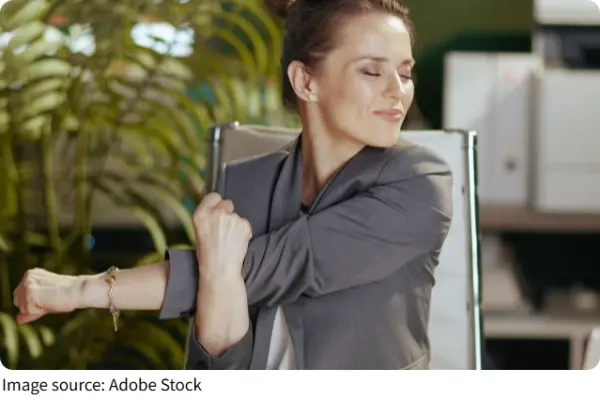
Practical Integration Into the Workday
Short movement breaks between tasks help maintain consistent physical activity without disrupting workflow. Each exercise can be completed in just a few minutes, making them easy to include in busy schedules. Alternating between seated and standing movements helps support overall body balance.
Simple reminders or scheduled breaks can help maintain consistency. Even small amounts of movement performed regularly throughout the day can improve comfort, focus, and physical stability over time.