Do Animals Really Feel Love?
Chandan Singh
| 26-06-2026
 · Animal team
Hi, Friends!
If you've ever had a dog lose its mind with joy when you walk through the door, or watched two penguins waddle around like they're on a romantic stroll, you've probably wondered: is that actually love, or just a really convincing performance?
Turns out, scientists have been asking the same question, and the answers are pretty fascinating.
The Science Behind Animal Feelings
Here's the thing about love in the animal kingdom: it's not just poetic fluff. There's actual chemistry involved. When animals bond with each other or with humans, their brains release oxytocin, which is the same "love hormone" that floods human brains during moments of deep connection.
So when your dog gazes at you with those big, melty eyes, their brain is literally cooking up the same feel-good chemicals yours is. That's not a coincidence. That's biology doing its thing.
Researchers have found that animals like prairie voles form lifelong pair bonds and show genuine distress when separated from their partners. They're basically the hopeless romantics of the rodent world. When a prairie vole loses its mate, it shows signs that look a whole lot like grief, reduced appetite, less movement, and a general "I don't want to do anything" energy that most of us recognize from our own bad days.
Love Beyond Romantic Pairs
Love in animals isn't just about finding a partner either. Elephants are a prime example of deep familial bonds. These massive, magnificent creatures mourn their dead, returning to the remains of lost family members and touching them gently with their trunks. That's not instinct running on autopilot. That's emotional memory, and it looks a whole lot like grief and love tangled up together.
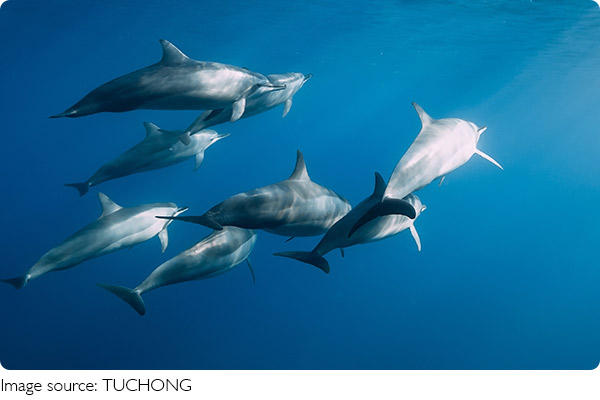
Dolphins form friendships that last for years. They play together, protect each other, and even comfort one another when things go sideways. Chimpanzees have been observed adopting orphaned young that aren't their own, essentially choosing to love a child that biology didn't assign to them. Sound familiar? That's because it is.
What About Pets and Humans?
The human-animal bond might be one of the most well-documented examples of cross-species love. Studies using brain imaging have shown that dogs' brains respond to the scent of their owners the way human brains respond to things that bring joy and reward. Your dog isn't just tolerating you for the kibble. They genuinely light up when you're around, and their brain scans are basically proof of that.
Cats get a bad reputation for being cold and indifferent, like that one coworker who never responds to your "good morning." But research shows cats do form secure attachments to their owners. They just express it differently. A slow blink from a cat is basically the feline version of "I trust you and I think you're pretty great," which, coming from a cat, is basically a declaration of devotion.
The Big Debate Among Scientists
Not everyone is ready to throw a party and declare animals fully capable of love in the way humans experience it. Some researchers argue that what we're seeing is complex behavior driven by evolutionary advantage rather than genuine emotion. Bonding helps animals survive, raise offspring, and stay safe. So maybe it's not love, they say.
Maybe it's just very effective teamwork. But here's the counterargument that keeps winning: the brain structures responsible for emotion in humans also exist in other mammals. The limbic system, which processes feelings, didn't appear out of nowhere in humans. It evolved over millions of years and is present across many species.
To say animals can't feel love while sharing the same emotional hardware seems a bit like saying your laptop can't play music just because it's a different brand from yours.
So while science is still working out all the details, the evidence is stacking up in a pretty compelling direction. Animals feel deeply, bond strongly, and grieve genuinely. Whether you call it love or something else entirely, it's real, it's measurable, and it's happening all around us. Next time your pet curls up next to you for no reason other than wanting to be close, maybe just let that be the love story it clearly is.