Can Apes Really Sign?

Chris Isidore
| 26-06-2026
 · Animal team
Hi, Friends!
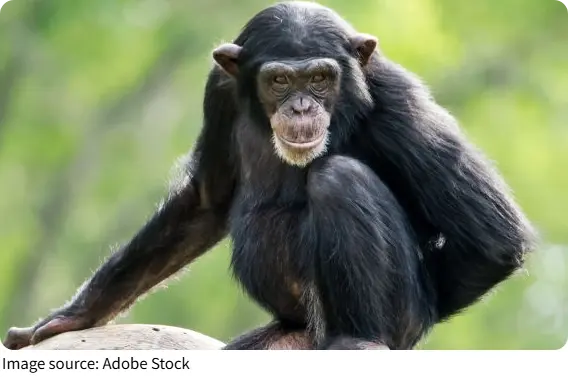
If you've ever looked at a chimpanzee and felt like they were judging you, you might not be wrong.
These incredibly clever creatures have been at the center of some of the most fascinating, eyebrow-raising experiments in the history of animal science, and the big question scientists kept asking was: can apes actually learn to talk to us using sign language? Spoiler alert: kind of, yes. And it's both amazing and a little humbling.
The Experiments That Started It All
The journey into ape sign language kicked off when researchers decided to teach American Sign Language to chimpanzees. The reasoning was pretty straightforward: chimps don't have the vocal anatomy to mimic human speech, but their hands? Remarkably capable. So scientists thought, let's skip the voice and go straight to the hands.
The most famous of these early stars was a chimp named Washoe, who became something like the celebrity pioneer of the whole movement. Washoe didn't just memorize a handful of signs like a party trick. She used them in combinations, applied them in new situations, and even appeared to teach some signs to her own offspring. That last part is the kind of thing that makes researchers nearly fall out of their chairs.
What the Chimps Actually Learned
Over the decades, various apes including chimps, gorillas, and orangutans were brought into these language experiments. Koko the gorilla is probably the second most famous participant, reportedly learning over a thousand signs and using them to express emotions, ask for things, and even comment on situations around her.
The apes weren't just memorizing a dictionary of hand gestures either. They showed signs of combining words creatively. When Washoe saw a swan and didn't know the sign for it, she reportedly signed "water bird." That's not rote memorization. That's problem-solving with language, which is the kind of thing that makes you sit back and rethink your whole understanding of animal intelligence.
The Critics Had Notes
Now, not everyone was throwing confetti over these results. A fair number of scientists pushed back, and their critiques were worth taking seriously. The main concern was something called the Clever Hans effect, named after a famous horse who appeared to do math but was actually just picking up on unconscious cues from his trainer.
Critics worried that the chimps weren't really using language so much as they were figuring out what gestures got them rewards. Some argued that trainers were unintentionally prompting the right signs through their own body language. This sparked a whole wave of more controlled experiments designed to rule out those kinds of hints.
Where the Science Landed
The debate never fully closed, but what emerged from decades of research is a pretty nuanced picture. Apes can clearly learn to associate signs with objects, actions, and even concepts. They can combine signs in ways that suggest basic grammar-like structures. Whether that counts as "language" in the full human sense is where things get philosophically murky.
Most researchers today would say apes demonstrate impressive communicative abilities that go well beyond simple conditioning. But they also note that ape signing lacks the spontaneous, open-ended creativity of human language. Think of it like this: a chimp with sign language is like someone who's really good at texting in a foreign language using only saved phrases. Impressive, but not quite the same as flowing conversation.
Why It Matters Beyond the Lab
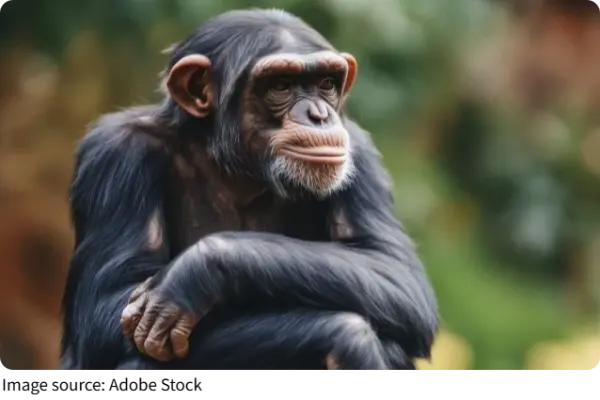
These experiments didn't just satisfy curiosity. They fundamentally changed how we think about the minds of other species. If apes can grasp symbols, combine them meaningfully, and even pass them on to others, that raises serious questions about the line we draw between human cognition and animal cognition.
It also pushed the conversation toward animal welfare in a big way. If these animals can communicate distress, preference, and emotion, that changes the ethical weight of how we treat them.
So the next time you lock eyes with a chimpanzee at the zoo and get that weird feeling they're sizing you up, just remember: they might actually have something to say about it. The science strongly suggests they've got the tools to try.