7-Day Veggie Plan

Hana
| 07-07-2026
 · Cate team
Honestly, the hardest part about going meatless isn't the cooking — it's deciding what to cook. Most people try to just subtract the meat from their usual meals and end up disappointed.
A chicken stir-fry without the chicken? That's a sad bowl of veggies. But build that same stir-fry around crispy tofu, roasted cashews, and a punchy peanut sauce? Nobody's missing anything.
That's the real shift — stop thinking subtraction, start building meals that actually shine on their own.

This seven-day plan covers breakfast, lunch, and dinner, with smart leftovers built in so you're not cooking from scratch every single night. It draws from cuisines that have been doing meatless beautifully for centuries — Mexican, Thai, Mediterranean, Italian — so nothing feels like a compromise.
Where's the Protein?
The first thing people ask is always: "But where do you get your protein?" Short answer — everywhere. One cup of cooked lentils gives you 18g. A block of firm tofu has around 21g. Chickpeas, black beans, eggs, Greek yogurt, cottage cheese — it adds up fast across the day without even trying. This plan averages around 60–80g per day, which covers most people's daily needs comfortably.
The Full Week, Day by Day
Start Monday with overnight oats loaded with chia seeds, banana, and peanut butter — prep it the night before and breakfast is done. Lunch is a Mediterranean chickpea salad with cucumber, tomatoes, feta, and lemon dressing. Dinner, black bean tacos with sautéed peppers, avocado, and lime crema.
Tuesday, breakfast is whole grain toast with cottage cheese, sliced tomatoes, and everything bagel seasoning. Those leftover taco fillings go over rice for lunch. No cooking needed. Dinner is vegetable pad thai with tofu, rice noodles, bell peppers, carrots, and a tamarind-lime sauce.
Wednesday morning is a Greek yogurt parfait with granola and mixed berries. Lunch is a hummus and roasted veggie wrap. Dinner: red lentil coconut curry with sweet potato and spinach over long-grain rice. This one's a keeper — make extra.
Thursday, breakfast is a banana and peanut butter smoothie with soy milk and a handful of spinach. That leftover curry becomes lunch with a dollop of yogurt on top. Dinner switches gears to caprese pasta with cherry tomatoes, fresh mozzarella, basil, and olive oil. Simple, quick, satisfying.
Friday is omelet morning, eggs with bell peppers, onion, and cheddar. Lunch, a big Greek salad with chickpeas and pita. Dinner is crispy baked falafel with tzatziki and pickled vegetables stuffed in warm pita.
Saturday gets a little more relaxed. Whole wheat pancakes with berries to start. Grilled cheese with tomato soup for lunch. Mushroom and spinach risotto for dinner — yes, it takes a bit of stirring, but it's worth it.
Sunday wraps up with a veggie-loaded frittata featuring zucchini, tomatoes, and goat cheese. Lunch is leftover risotto with a fried egg on top — honestly one of the best combos. Dinner finishes with stuffed bell peppers with quinoa, black beans, corn, and melted cheese.
The Leftovers Strategy
Leftovers here aren't an afterthought — they're the plan. Monday's taco filling becomes Tuesday's rice bowl. Wednesday's curry feeds you again on Thursday. Saturday's risotto becomes Sunday's lunch. That cuts your actual cooking time in half across the week without eating the same thing twice in a row.
What It Costs
Plant proteins are dramatically cheaper than meat. A pound of dried lentils runs about $1.50 and stretches to eight servings. A block of tofu costs $2–3 for four portions. When you center the week around legumes, eggs, and dairy instead of meat, your grocery bill can drop by 40–60%. The full grocery list for two people — produce, proteins, pantry staples — comes in around $44–56 for the week. That's roughly $3–4 per person per day for three meals.
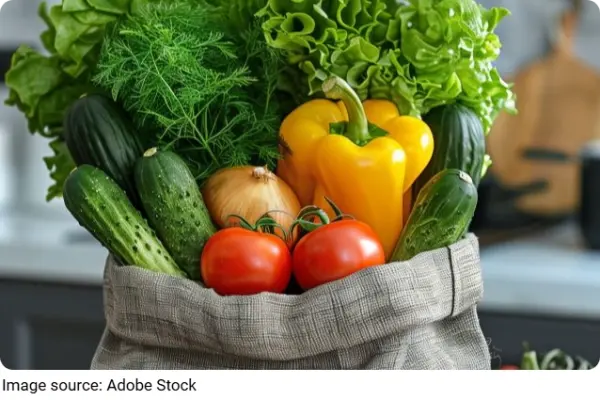
A well-planned vegetarian diet covers most nutritional needs, but a few things are worth keeping an eye on. Vitamin B12 is mainly found in animal products, so if eggs and dairy are part of your routine, you're likely fine. Iron from plant sources absorbs better when paired with vitamin C — think lentils with tomatoes, or spinach alongside citrus. Chia seeds and flaxseed help cover your omega-3 bases. Zinc shows up in chickpeas, lentils, cashews, and oats, all of which are already on this week's menu.
None of this needs to feel complicated. With a plan like this, the nutritional gaps fill themselves in naturally — you just have to cook it.