Lemon, Beyond Juice

Tessa
| 28-08-2026
 · Cate team
Hi, everyone. Lemons usually get reduced to one quick job, you squeeze them and move on.
But a lemon gives you more than juice, and that starts with what is inside it. A raw lemon is mostly water, yet it still brings vitamin C, citric acid, smaller amounts of B vitamins, and minerals such as potassium.
The fruit also gives you peel, pulp, and zest, and each part can do something useful in your kitchen instead of being tossed aside.
Vitamin C does the heavy lifting
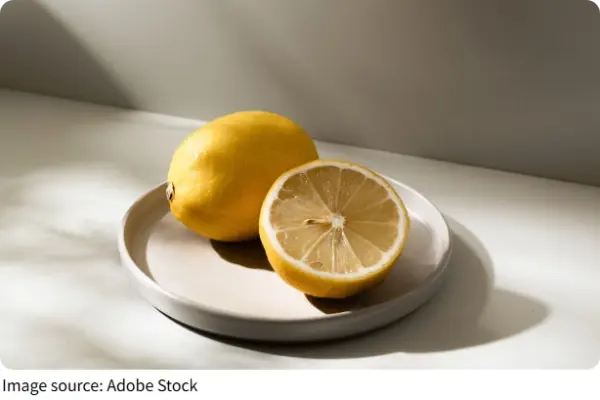
Lemons are known first for vitamin C, and that reputation comes from a real, specific detail. In a standard raw lemon, the juice and flesh provide a notable amount of vitamin C, the nutrient linked with immune function and collagen production. You also get citric acid, which gives the fruit its sharp taste. That acidity is why lemon juice works so well in a glass of water, but it also matters in food, for example in a bean salad where a few spoonfuls brighten the flavor without adding much else.
The peel carries extra value
Most people use the inside and ignore the outside, but the peel is one of the most useful parts. Lemon peel contains fiber and fragrant compounds from the rind, including limonene, which is concentrated in the outer layer. That is why a little zest changes a whole bowl of food. You can grate zest into rice, stir it into plain yogurt, or add it to cake batter for a cleaner, stronger lemon taste than juice alone gives. If you use the peel, wash the fruit well first and take just the yellow part, not the white pith underneath, because the pith tastes much more bitter.
Pulp and slices still count
Juicing is common, but it leaves behind useful texture. The pulp contains fiber, and that gives you a simple reason not to strain everything until it is completely smooth. In a tuna salad, grain bowl, or chilled dessert, small bits of lemon flesh add both tartness and texture. Thin slices can also be used directly in cooking. You can lay lemon rounds over fish before baking, add slices to roasted potatoes, or drop a few into hot water with ginger when you want a drink that tastes fresh without needing much sugar.
It works in sweet and savory food
People often think of lemons in drinks first, but they fit into far more than that. In savory cooking, lemon juice is useful in dressings, marinades, and soups. A lentil soup finished with a squeeze of lemon tastes sharper and less flat. In sweeter dishes, zest is often the better choice because it adds aroma without as much sourness. Lemon zest in shortbread or pancakes gives you a clear citrus note, while lemon juice in fruit salad helps with flavor and can slow browning in cut apples and pears.
Small handling choices matter
A lemon can be awkward if you use it straight from the refrigerator, but a small change helps. If you bring it to room temperature first or roll it on the counter before cutting, you usually get more juice out. If you need zest, do that before slicing. If you have extra lemon, you can keep juice for a short time in the refrigerator, or freeze small portions for later cooking. The peel can be dried or mixed with salt or sugar, depending on how you plan to use it in baking or cooking.
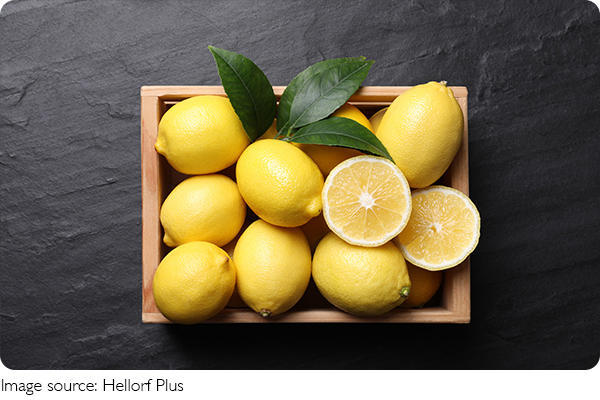
Lemons are easy to overlook because they show up in small amounts, one wedge here, one squeeze there. But that small fruit gives you vitamin C, useful acidity, fiber in the pulp and peel, and several practical ways to build flavor beyond a basic drink. So next time you bring home a lemon, do not stop at juice, use the zest, the slices, and the pulp too, and you will get much more out of it.