Plants
Those Colorful Palm Fruits
Have you ever walked beneath a large palm and noticed clusters of small orange or yellow fruits tucked under its enormous crown? (You'll have to imagine otherwise).
The Canary Island date palm produces fruits that look like miniature dates and they really are relatives of the dates we buy as food. But there is a reason these little fruits rarely appear on our plates.
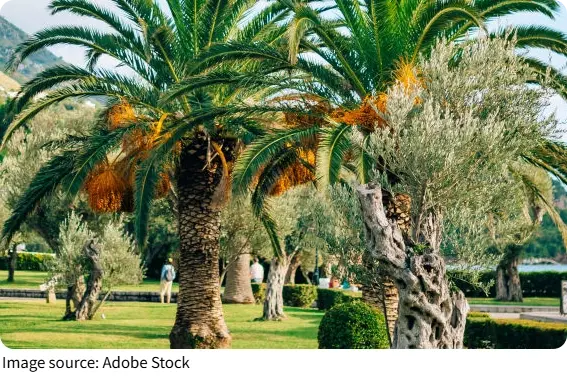
Are They Actually Dates?
In botanical terms, they are date-like fruits produced by a plant in the same genus as the commercial date palm. Canary Island date palm fruits are generally only around 1.5 to 2 centimeters long and turn yellow-orange as they ripen.
Inside is a relatively large seed surrounded by only a thin layer of flesh. That is the first clue as to why these colorful fruits never became supermarket favorites.
So, Can We Eat Them?
Yes, the fruit is generally considered edible. The catch is that there is not much worth eating.
The plant is mainly grown for its ornamental value, rather than for fruit production.
So the more interesting answer is not “Are they edible?” but “Why don't we eat them?” Their large seed and limited flesh simply make other date species far more appealing as food.
We should still avoid casually eating fruit collected from street trees, parks, or other landscaped areas. Correct identification matters, and we may not know what pesticides or other treatments have been used around an ornamental plant.
Why Do We Grow This Palm?
We usually see this palm because of its impressive appearance. A mature specimen can develop a thick trunk, long green leaves, and a broad crown that spreads outward in a rounded form. This structure gives gardens and open spaces a strong visual focal point.
The palm also creates a warm, tropical feeling without requiring a complicated landscape design. We can plant it as a single feature or use several specimens to create a clear planting line along a spacious outdoor area.
More Than a Fruit Tree
The Canary Island date palm is native to the Canary Islands, but it has become a familiar ornamental palm in warm regions around the world. Its appeal comes largely from its imposing shape: a thick single trunk topped by a huge crown of arching green fronds. NParks notes that the species can reach about 21 meters tall, with individual leaves reaching several meters in length.
Those leaves also hide something worth knowing. The lower portions carry sharp spines, so approaching or pruning a mature palm requires care.
Can We Grow One From a Seed?
Those little fruits contain viable seeds, so new palms can be grown from them. Germination time varies considerably with temperature, moisture, and other conditions. NParks reports that fresh seeds can germinate within about 30 days, while UF/IFAS gives two to three months under its specified high-temperature growing conditions.
Look, But Think Before You Taste
Those bright clusters beneath a Canary Island date palm are more than decoration. The fruits are edible, but their thin flesh and modest flavor explain why this spectacular palm became famous as a landscape tree rather than a source of dates.
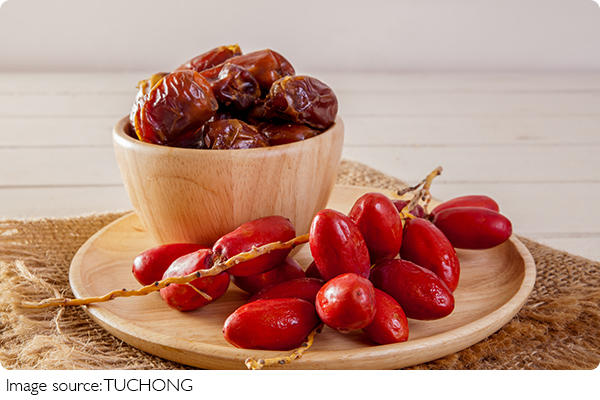
So the next time we spot what looks like tiny dates hanging overhead, there is a neat answer to the mystery: yes, they are edible, but the better dates are growing on a different palm.