Plants
Coconut Tree Secrets
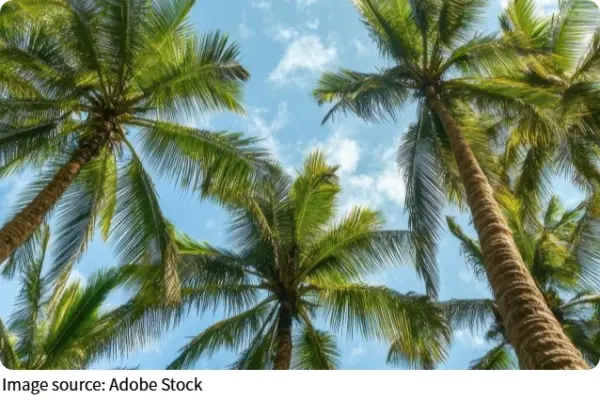
Lykkers, have you ever wondered why coconut trees appear so often beside tropical seas? Blue water, bright sunshine, warm air, and tall green crowns create a scene we naturally connect with the coast.
But this is more than a beautiful view. Coconut trees have several natural features that make coastal areas especially suitable for them. Let us discover why these trees seem so closely connected with the sea.
Natural Salt Tolerance
Coastal ground can contain more salt than land farther inland, especially where sea spray reaches the soil. Many plants struggle in salty conditions, while coconut trees are better suited to them.
Their roots can handle changing moisture and salt levels while taking in water and nutrients. This gives them an advantage along tropical shores, where some plants have difficulty becoming established.
Built For Strong Winds
Coastal areas often experience strong winds, particularly during seasonal storms. Coconut trees have flexible trunks that can bend and sway with moving air instead of resisting every gust.
Their roots also spread widely through the ground. This helps anchor the tall tree in loose sandy soil and gives it support when strong breezes move through the leaves.
A Love For Sunshine
Coconut trees are tropical plants, so warm temperatures and plenty of sunlight are important for healthy growth. Tropical coastal regions often provide long periods of bright sunshine throughout the year.
Open shorelines also give plants plenty of access to light. When warmth, sunlight, and suitable moisture come together, the coast offers many of the conditions needed for strong growth and fruit production.

The Coconut Journey
The coconut itself also helps explain this connection. Its tough outer covering contains many fibers and allows it to remain afloat in seawater. When coconuts fall into the ocean or are carried by waves, they can travel long distances before reaching another shore.
If one reaches a warm place with suitable soil and moisture, it can begin growing into a new tree. Ocean currents have therefore helped these plants spread naturally along tropical coastlines.
Roots That Hold Firm
We can look beneath the surface to understand another advantage. Coconut trees develop many roots that extend outward from the base. Instead of relying on one large central root, they create a broad network that supports the tall trunk.
This structure works well in sandy ground, where loose particles can shift easily. The root network helps the tree stay stable while searching for moisture and nutrients.
Leaves Made For Wind
The leaves provide another useful adaptation. Coconut leaves are long and narrow, allowing them to move freely in strong air currents. Rather than forming one large rigid surface, they bend and sway with the breeze.
This shape helps reduce pressure from coastal winds. The leaves also help control water loss, which is useful in bright, warm places where the surrounding air can become dry.
Why Not Every Place?
Coconut trees are strongly associated with beaches, but they are not limited to the shoreline. They can grow farther inland when the climate and soil are suitable.
Temperature is one major factor. Cold conditions can slow growth and damage tropical plants, making many cool mountain areas unsuitable. Poor drainage can also cause problems. These trees generally perform better when their roots have enough air, moisture, and room to spread.
More Than A Pretty View
We often notice coconut trees because they make a landscape feel instantly tropical, but their value goes beyond scenery. Their fruit provides food and refreshing liquid, while different parts have been used for building materials, weaving, household items, and crafts.
Because of this usefulness, coconut trees have become an important part of everyday life in many warm regions. Their ability to handle coastal conditions makes them both practical and visually distinctive.
They Can Grow Inland
Here is a small surprise, Lykkers: coconut trees do not actually need to live beside the ocean. They can grow near rivers, lakes, gardens, and farms when they receive enough warmth, sunlight, moisture, and suitable soil.
The coast simply brings many favorable conditions together. Warm air, bright light, loose ground, and regular moisture can create a comfortable setting for these tropical plants.
Nature's Coastal Strategy
So, Lykkers, the next time we see coconut trees moving gently beside the sea, we can look at the view differently. Their presence reflects a long process of natural adaptation.
Salt tolerance, flexible trunks, spreading roots, sun-loving leaves, and floating fruit all work together to make coastal life a good match. The sea is more than a beautiful background; it has helped shape where these trees can travel and grow.
Have you ever seen a coconut tree growing far from the coast? Think about where you saw it and what the surrounding landscape looked like. Sometimes, a familiar tree can tell us a surprising story when we take a closer look.