Plants
Why Containers Struggle
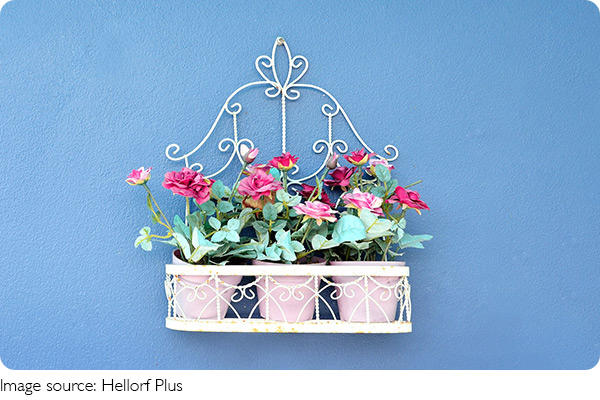
A terrace filled with flowering plants may look simple, but container gardening creates a very different environment from planting directly in the ground. Roots have less room, moisture changes faster, surfaces heat and cool more quickly, and neighboring plants may compete for light.
The useful question is therefore not just which flowers look good together, but whether each container creates workable conditions for the plant inside it.
Start With Root Space
The visible size of a plant can be misleading.
Look below the foliage
Two plants of similar height may need very different root volumes. A compact seasonal flower may remain comfortable in a relatively small container, while a vigorous herb or shrub can quickly fill the same space.
Instead of choosing only by appearance, check whether roots are circling densely around the inside or emerging strongly from drainage openings.
Those are observable signs that root space is becoming limited.
A larger container does not automatically solve every problem, but it usually changes two important variables at once: available root volume and the speed at which the growing medium dries.
Drainage Comes Before Watering
Many container problems are blamed on "too much water" when the real issue is water that cannot escape.
Check the exit route
A container should allow excess water to leave rather than remain trapped around roots.
After watering thoroughly, observe whether water drains from the base within a reasonable period. If the surface remains saturated for a long time, investigate blocked openings, compacted growing medium, or a container sitting flat in collected water.
Do not create drainage by adding a deep layer of stones beneath the growing medium. That does not reliably improve water movement through the root zone. A well-draining growing medium and functioning drainage openings matter more.
Small Containers Change Faster
Container size affects more than root room.
Think in terms of water reserve
A small container holds less growing medium, which means less stored moisture.
On a warm, windy day, a small flowering plant may dry noticeably faster than a larger container holding the same species.
This is why watering every plant on the same schedule is unreliable.
Push a finger a few centimeters into the growing medium. If the surface feels dry but the layer underneath remains moist, immediate watering may not be necessary.
The plant, container size, weather, and exposure all change the result.
Group by Water Demand
A crowded display becomes easier to manage when plants with similar needs stay near one another.
Do not organize by color alone
A blue-flowering plant and a red-flowering plant may look attractive side by side, but their watering requirements could differ.
If one prefers a consistently moist growing medium while the other performs better with more drying between waterings, treating them as a single group creates unnecessary difficulty.
Arrange containers by care pattern first, then refine the visual composition.
This creates practical zones: plants checked frequently, plants that tolerate some drying, and larger containers that change more slowly.
Watch the Hidden Shade
Container displays often change as plants grow.
Leaves can rewrite the light map
A small plant placed beside a taller one may receive strong light in early spring and much less several weeks later.
That shift can happen gradually enough to escape notice.
Every few weeks, check the display during both the morning and the afternoon. Notice which containers are now shaded by taller foliage, nearby furniture, or walls.
Moving a container by 20–30 cm can sometimes substantially change its light exposure.
"Looks bright" is an impression. Direct light reaching the leaves for part of the day is an observable condition.
Protect the Surface Below
Container gardening also affects furniture, flooring, and nearby walls.
Water should not disappear unnoticed
Drainage water can stain wood, leave mineral marks, or keep a surface damp.
Use a suitable saucer or protective tray where needed, but do not allow the container to sit continuously in collected water unless the plant specifically tolerates that condition.
Check underneath containers occasionally, especially after heavy watering.
Moisture trapped beneath a decorative container can remain unnoticed long after the leaves above look dry.
Create a Two-Minute Check
A large container display becomes easier when the inspection is simple.
Check four things
Look at:
the top few centimeters of growing medium,
the drainage area,
new leaf growth,
and the underside of a few leaves.
You are looking for changes rather than perfection: unexpected wilting, persistent wetness, drying much faster than neighboring plants, damaged leaves, or visible pests.
That short routine is more informative than automatically watering everything.
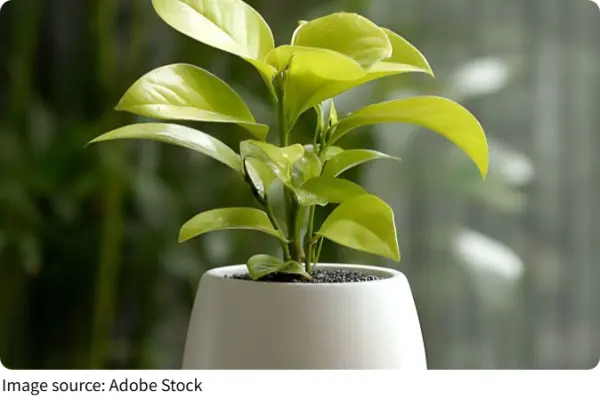
Container growing is less about constant care than about reading a small, fast-changing environment. Root space, drainage, moisture reserve, light, and grouping all interact. Once those factors are deliberately arranged, a terrace display becomes easier to manage and far more than just a collection of flowers placed side by side.