Plants
Why Flowers Are Bright
Hi, Readers! Step into a garden for just a moment, and one thing stands out right away: flowers seem to glow with color.
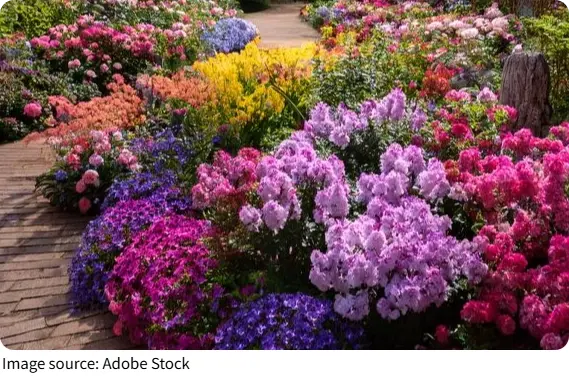
Some are bright red, some are sunny yellow, some are deep purple, and others look almost painted by hand. These beautiful shades are not there by chance.
In many plants, colorful flowers play an important part in helping the plant continue its life cycle.
Flowers are the reproductive part of many plants. Their shape, scent, and color all work together as signals. Bright colors help attract pollinators such as bees, butterflies, birds, and other animals that move pollen from one flower to another. When pollen is transferred, the plant can produce seeds.
So, the lovely colors we enjoy are often closely linked to the plant's survival.
Color as a signal
Different pollinators notice different colors. Bees are especially good at seeing blue, purple, and ultraviolet patterns that people cannot easily see. Birds are often drawn to red or orange flowers. Because of this, many plants have evolved colors that match the vision of the pollinators they depend on most. A flower's petals can act like signs, guiding a visitor toward nectar and pollen.
These colors come from natural pigments in the petals. Common pigments include anthocyanins, which can create red, purple, and blue shades, and carotenoids, which often produce yellow and orange tones. The exact color a flower shows depends on the pigments present, how concentrated they are, and even factors inside the petal cells.
More than just beauty
A flower's color is not only about attracting helpful visitors. In some cases, color can also help a flower stand out from the leaves around it. Green foliage can easily blend into the background, so a bright flower becomes easier to notice. This gives the plant a better chance of being visited.
Color may also change over time. Some flowers shift shade as they age or after pollination. That change can signal to pollinators which flowers still offer nectar or fresh pollen. In this way, color becomes part of a quiet communication system between plants and animals.
Why not all flowers are bright
Not every flower needs vivid petals. Some plants rely on wind rather than animals to move pollen. These flowers are often small, plain, or greenish because they do not need to attract pollinators. Others may bloom in places where scent matters more than color, or where their pollinators are active in low light.
There are also white flowers, which can be very effective. White petals can reflect light well and may be easier to spot in dim conditions. So even when a flower does not look bold or dramatic, its appearance can still be well suited to its environment and pollination strategy.
A result of long adaptation
Over many generations, plants with flower colors that better attracted pollinators were more likely to reproduce successfully. Little by little, this helped shape the wide range of flower colors we see today. The relationship between flowers and pollinators is a beautiful example of adaptation in nature.
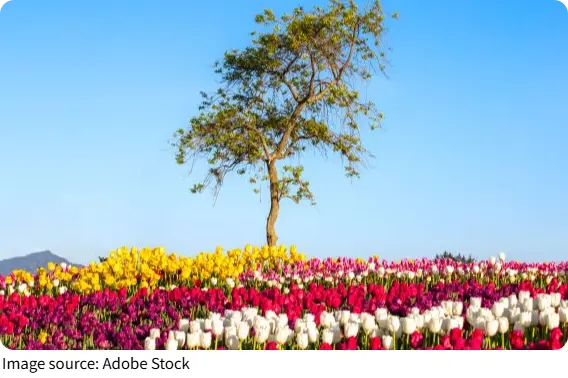
So when you see a bright flower, you are looking at more than something pretty. You are seeing a clever survival strategy, built through time, that helps a plant be noticed, visited, and reproduced. Next time you pass a flower bed or a wild patch of blooms, take a closer look and wonder who those colors are trying to call over.