Animal
The Tiny Seed Hunter
Good Day, Friends! Eurasian Siskins are small finches with slender bills suited to handling seeds. Their diet often includes seeds from conifers, birches, and other plants.
Their yellow-green plumage and darker markings help make them recognizable. They use woodland habitats and may move seasonally as food availability changes.
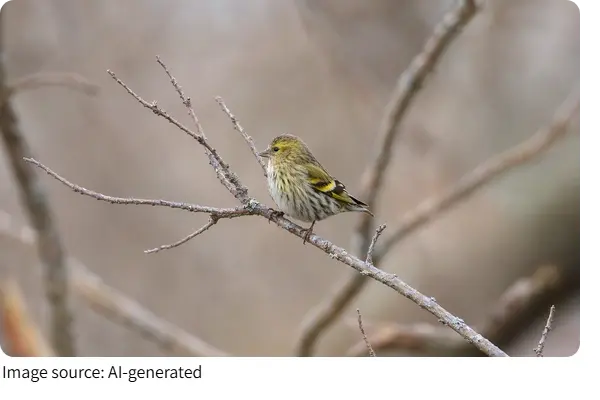
Their Bills Help Them Handle Tree Seeds
The Eurasian Siskin (Spinus spinus) is a small finch with a narrow bill suited to extracting seeds from cones. It commonly feeds on seeds from conifers as well as alder and birch.
This feeding habit is closely connected to its woodland habitat. Siskins are strongly associated with coniferous forests, where suitable tree seeds provide an important food source.
Males and Females Have Noticeable Differences
Male Eurasian Siskins have bright yellow-green plumage, with a distinctive black crown and bib and yellow markings on the wings and tail. Females are generally duller and more heavily streaked, without the male's prominent black crown and bib. These differences can help birdwatchers distinguish males and females when observing the species.
Their Food Supply Can Affect Where They Appear
Siskins can change where they feed when natural seed supplies vary. When tree seeds become less available, they may visit garden feeders and feed alongside other seed-eating birds. Their numbers in a particular area can therefore fluctuate considerably depending on the availability of their preferred seeds.
They Can Move Between Regions Seasonally
Some Siskins remain in the same general region throughout the year, while others move seasonally. In Britain and Ireland, breeding populations can be joined by birds arriving from other parts of Europe during winter.
Their movements are partly connected to food availability. Areas with suitable seed resources can place Siskins in different habitats at different times of the year.
They Are Agile Feeders
Siskins are strongly associated with coniferous woodland but also use mixed woodland containing trees such as birch and alder.
Their small size and agility allow them to cling to slender branches and reach seeds that might be difficult for larger birds to access.
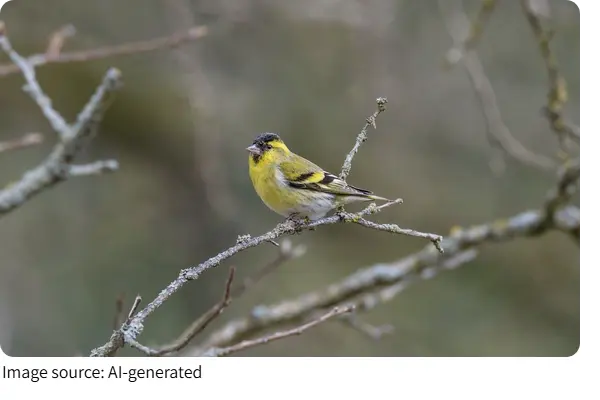
For such a small bird, the Eurasian Siskin has some impressive adaptations. Its specialized bill, flexible diet, and willingness to travel in search of good seed crops help it make the most of changing woodland conditions. The next time a tiny yellow-green finch appears among the branches, or unexpectedly at a garden feeder, it may be worth taking a closer look.
Eurasian Siskin Things You Need To Know!
In Focus