Plants
Grape Hyacinth Are Awesome
Grape hyacinth is a spring-flowering bulb that can be planted in garden beds, borders, rock gardens, and containers.
Planting the bulbs at the right depth, choosing well-drained soil, and providing suitable light gives the bulbs the conditions needed to establish roots before spring growth begins.
1. Choose a Suitable Planting Location
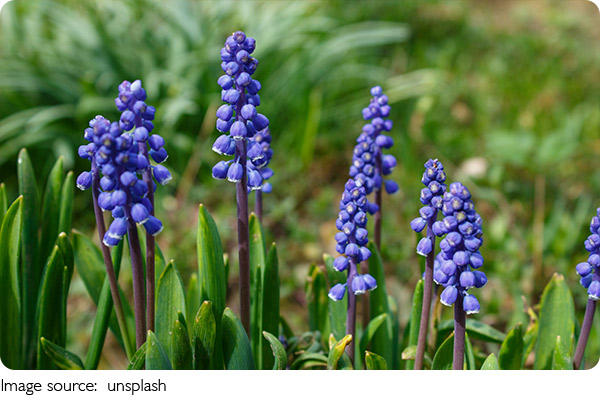
Grape hyacinth grows well in full sun to partial shade. A location with several hours of sunlight can support flowering, while some afternoon shade can be useful in warmer conditions. The soil should drain well because bulbs can rot when they remain in consistently wet soil. Heavy soil can be improved with organic matter to increase drainage and soil structure.
Grape hyacinth can also grow in containers. Choose a container with drainage holes and use a well-draining growing medium. Containers can be placed where the plants receive sufficient sunlight during their growing period.
2. Plant the Bulbs in Fall
Grape hyacinth bulbs are generally planted in fall, before the ground becomes difficult to work. Planting during this period allows the bulbs to develop roots before winter.
Follow these steps when planting:
1. Prepare loose, well-drained soil in the selected location.
2. Dig holes approximately 2–3 inches deep.
3. Place each bulb with the pointed end facing upward.
4. Space the bulbs about 2–3 inches apart for a grouped planting.
5. Cover the bulbs with soil and water the planting area thoroughly.
6. Allow excess water to drain rather than leaving the soil saturated.
The planting depth and spacing can be adjusted according to the bulb size and growing conditions. Avoid planting bulbs in areas where water collects after rainfall.
3. Water and Feed Carefully
Water newly planted bulbs after planting so the soil settles around them and the roots can begin developing. During the growing season, provide water when the soil begins to dry rather than following a fixed watering schedule. Spring rainfall may provide much of the moisture grape hyacinth needs. Additional watering may be necessary during dry periods, but consistently wet soil can increase the risk of bulb problems.
Grape hyacinth generally does not require heavy feeding. A balanced bulb fertilizer can be applied according to its label directions when growth begins. Avoid excessive fertilizer, as it can encourage foliage growth without providing a corresponding benefit to flowering.
4. Care After Flowering
Grape hyacinth produces clusters of small flowers in spring. Once flowering ends, remove the spent flower heads if seed production is not desired. Allow the foliage to remain until it naturally turns yellow and dies back. The leaves continue supporting the bulb after flowering, so cutting them while they are still green can reduce the plant's ability to store energy for the following growing season.
Grape hyacinth can spread over time by producing offsets around the original bulbs. When a planting becomes crowded, lift the bulbs after the foliage has died back, carefully separate the offsets, and replant them at the appropriate depth. Container-grown bulbs may need more attention to moisture because containers can dry out faster than garden soil. Check the growing medium regularly and adjust watering according to temperature, rainfall, container size, and plant growth.
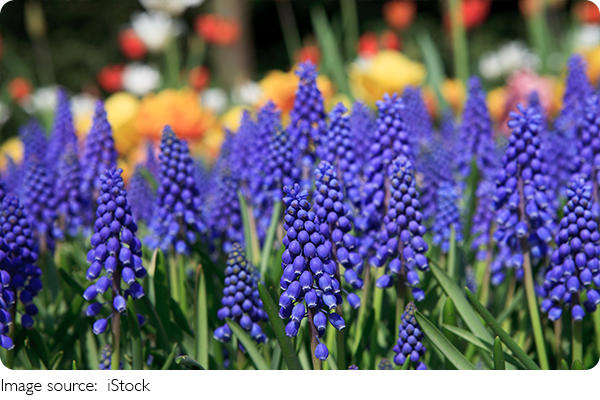
Grape hyacinth needs well-drained soil, suitable sunlight, and careful moisture management from planting through dormancy. Plant the bulbs in fall at about 2–3 inches deep, keep the soil from remaining saturated, and leave healthy foliage in place after flowering until it dies back naturally. These steps give the bulbs time to establish and prepare for another growing season.